


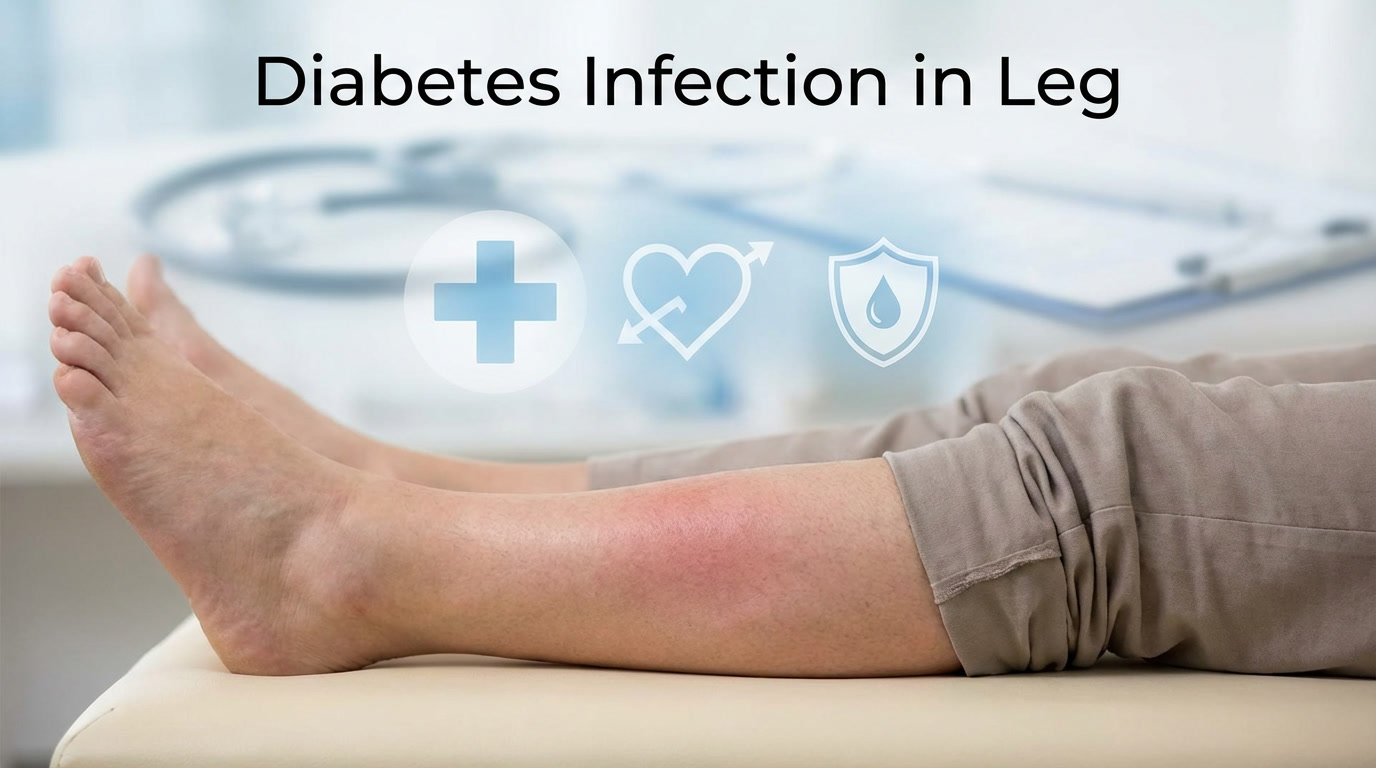
A diabetes infection in leg develops when high blood sugar slows healing and weakens the body’s ability to fight germs. What often starts as a small cut or sore can turn into a serious infection if it is ignored. Many people do not feel pain early, which allows wounds to worsen. Understanding early signs, healing timelines, and proper care can prevent long term damage and improve outcomes.
What is a diabetes infection in leg and why does it happen
A diabetes infection in leg happens when bacteria enter the skin or tissue and the body cannot stop the infection effectively. Diabetes changes how blood, nerves, and immune cells work, especially in the legs.
High blood sugar affects white blood cells, which are the body’s main defence against infection. These cells move slower and react less effectively when sugar levels stay high. At the same time, diabetes damages blood vessels. Less blood reaches the legs, which means less oxygen and fewer healing nutrients.
The skin also becomes more fragile. Dryness, cracks, and thinning of the skin create small openings where bacteria can enter. Many infections begin with something minor, such as a scratch, blister, or insect bite.
Because nerve damage reduces sensation, many people do not notice early injury. By the time redness or swelling appears, infection may already be present.
Why does leg infection and diabetes create slow healing wounds
Leg infection and diabetes often lead to slow healing because healing requires several systems to work together. Diabetes disrupts all of them.
Blood flow delivers oxygen and nutrients to wounds. Diabetes narrows blood vessels and slows circulation. This makes it harder for wounds to close.
Nerve damage also plays a role. Reduced feeling means pressure, friction, or injury may continue without pain signals. This delays rest and care.
The immune response becomes weaker. Bacteria survive longer and spread deeper before the body reacts. This is why wounds that would heal quickly in others may remain open in people with diabetes.
Slow healing is not a failure of effort. It is a medical effect that requires patience, monitoring, and care.
How does a diabetic wound in leg turn into an infected ulcer
A diabetic wound in leg often starts small. It may be a cut, scrape, blister, or pressure point. When healing slows, the skin breaks down further.
As tissue weakens, an ulcer forms. An ulcer is an open sore that exposes deeper layers of skin or tissue. Bacteria enter easily at this stage.
Moisture, pressure, and poor blood flow make ulcers worse. Once bacteria multiply, the wound becomes infected. This can cause redness, warmth, swelling, discharge, and odor.
If infection spreads, deeper tissue and bone may become involved. Early care prevents this progression.
What do diabetic leg ulcers look like in early stages
Early stage diabetic leg ulcers often look harmless. The skin may appear red, darker than normal, or slightly swollen. A small open area may form.
Some ulcers look dry or cracked. Others leak clear or yellow fluid. There may be thickened skin around the sore.
Pain may be mild or absent due to nerve damage. This makes visual checks important.
Knowing what does a diabetic ulcer look like helps people seek help before infection develops.
How can you tell when a diabetic sore on leg is infected
A diabetic sore on leg becomes infected when bacteria grow faster than the body can control. Common signs include spreading redness, swelling, warmth, and increasing pain.
Other signs include pus, foul smell, fever, or chills. The skin may look shiny or tight. Fluid may seep from the wound, which may be called weeping sores on legs.
Some people feel tired or unwell without clear pain. These general symptoms matter and should not be ignored.
Any sign of infection needs prompt medical attention.
How serious are diabetic leg ulcers and cellulitis diabetes
Diabetic leg ulcers can become severe if untreated. When bacteria spread into surrounding skin, cellulitis diabetes may develop.
Cellulitis causes redness, swelling, warmth, and tenderness. It can spread quickly and enter the bloodstream.
In advanced cases, infection damages tissue and reduces blood supply further. This may lead to tissue death, also called diabetic necrosis foot.
Serious infections may require hospital care, IV antibiotics, or surgery. Early treatment greatly reduces these risks.
How long does a diabetic wound take to heal on the leg
Healing time varies. Small wounds may heal in weeks. Larger ulcers may take months.
Factors that affect healing include blood sugar control, circulation, infection presence, wound size, and daily care.
If infection exists, healing slows. With proper diabetic wound treatment and stable glucose levels, healing improves.
Doctors monitor progress over time. Healing is often gradual but possible with consistency.
What treatment options work for diabetic ulcers on legs
Treatment for diabetic ulcers on legs focuses on cleaning the wound, controlling infection, and reducing pressure.
Doctors may remove dead tissue, apply dressings, and prescribe antibiotics. Special shoes or braces reduce pressure on the leg.
Blood sugar control is critical. Without it, treatment is less effective.
Education plays a key role. Resources like Books_WD help people understand care steps and avoid mistakes that slow healing.
Can diabetic leg ulcers be cured and prevented long term
Many diabetic leg ulcers can be cured, especially when found early. Healing depends on care consistency and medical support.
Prevention includes daily leg checks, moisturizing dry skin, wearing proper footwear, and controlling blood sugar.
Regular check-ups catch problems early. Long term care lowers repeat risk and protects leg health.
Conclusion
A diabetes infection in leg develops when healing slows and bacteria grow in untreated wounds. Early signs include redness, swelling, and open sores. With early care, proper treatment, and blood sugar control, healing is achievable.
Education builds confidence and improves outcomes. Books_WD provides trusted, easy to understand health information that supports better decisions and safer care.
If you notice changes in your legs or healing slows, take action early. Awareness today can prevent serious problems later.

