


Early signs of diabetes in men can often be overlooked or mistaken for other health conditions. By understanding the symptoms and recognizing them early, you can take the right steps toward better health management. In this blog, we’ll break down what to look for, how to address the symptoms, and why it’s important to get checked early. With the right knowledge and lifestyle changes, early intervention can lead to a healthier life. Books_WD is here to help guide you through understanding these signs and taking action.
Early Signs of Diabetes in Men
Diabetes is a serious condition that affects millions of men worldwide. Recognizing the early signs of diabetes in men is crucial for catching it early and preventing long-term complications. If you notice some of the symptoms listed here, it might be time to consult with a healthcare provider for a diagnosis and further evaluation.
What is Diabetes?
Diabetes is a condition where the body cannot properly process or use glucose (a type of sugar). This happens because the body either doesn’t produce enough insulin or cannot use the insulin it produces effectively. There are two main types: Type 1 and Type 2 diabetes. Type 1 is typically diagnosed in childhood, while Type 2 is more common in adults. The signs of diabetes in men can vary, and it’s essential to pay attention to any unusual symptoms that may arise.
How to Recognize the Early Symptoms of Diabetes in Men
Men may experience a range of symptoms that signal the onset of diabetes. Being aware of these early symptoms can help in managing the condition before it progresses. Some early signs of diabetes in men include:
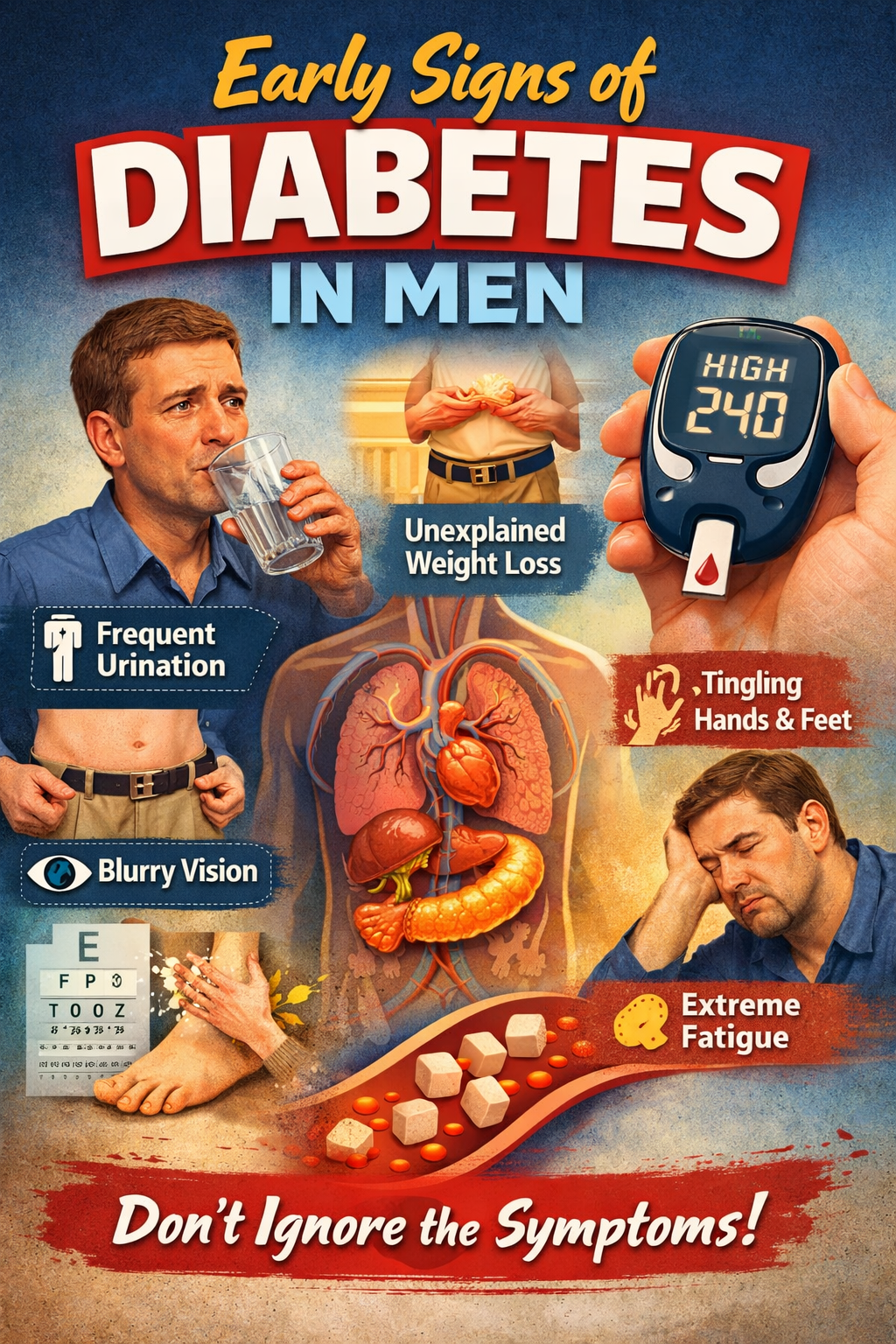
- Increased thirst and frequent urination: You might find yourself drinking more water than usual or needing to visit the bathroom frequently. This happens because the body is trying to flush out excess sugar from the bloodstream.
- Fatigue: Feeling unusually tired, even after a full night’s sleep, is another common symptom. When the body can’t properly use glucose for energy, it can leave you feeling drained.
- Blurred vision: High blood sugar can cause the lenses of your eyes to swell, affecting your vision. If you’re finding it difficult to focus or notice changes in your eyesight, it might be a sign of diabetes.
Physical Changes That Could Indicate Diabetes
The body’s response to fluctuating blood sugar levels can manifest in many ways. It’s essential to keep an eye out for symptoms of diabetes in men such as:
- Unexplained weight loss: Even though you’re eating normally, you may notice that you are losing weight. This happens because the body starts burning fat and muscle for energy when it can’t process glucose properly.
- Slow healing of cuts and wounds: If you have a cut or wound that takes longer to heal than usual, it may be a sign that your blood sugar levels are not well-controlled.
- Tingling or numbness in hands or feet: High blood sugar can damage the nerves, leading to a sensation of tingling or numbness, especially in the extremities.
How Blood Sugar Affects the Body: What to Look For
High blood sugar doesn’t just affect your energy or vision – it impacts your overall health. Some of the common symptoms associated with elevated blood sugar include:
- Increased hunger: When the body isn’t able to use glucose effectively, it sends signals of hunger to compensate for the lack of energy.
- Increased infections: High blood sugar can lower your immune system, making you more susceptible to infections. If you’re experiencing frequent skin infections, urinary tract infections, or other unusual signs, it could be diabetes-related.
The Role of Family History in Identifying Early Signs
If diabetes runs in your family, you may be at a higher risk of developing it. Early signs of diabetes in men can be more easily spotted if you’re aware of your family’s health history. Knowing that your father, mother, or other close relatives had diabetes could prompt you to be more proactive in recognizing symptoms early on.
It’s also a good idea to share your family’s health history with your doctor. By doing so, your healthcare provider can guide you on how to monitor your blood sugar levels and detect any changes early.
Behavioural and Mental Health Symptoms to Watch For
Diabetes doesn’t just affect the body physically it can impact mental health as well. Men with diabetes often experience:
- Mood swings: High blood sugar levels can affect brain chemistry, leading to irritability and mood changes. If you’re feeling off-balance emotionally, it might be more than just a bad day.
- Difficulty concentrating: Another sign of fluctuating blood sugar is having trouble focusing or concentrating on tasks, which can interfere with your daily life and productivity.
The Importance of Early Diagnosis and Lifestyle Changes
Catching early signs of diabetes in men is crucial because early intervention can reduce the risk of complications, such as heart disease, kidney damage, and nerve damage. If you are experiencing any of the symptoms mentioned above, it’s important to visit your doctor for a blood sugar test.
Lifestyle changes play a significant role in managing or even reversing Type 2 diabetes. Adopting a balanced diet, exercising regularly, and managing stress can help control blood sugar levels. Your healthcare provider can recommend specific changes that will work best for your situation.
Conclusion: Why Monitoring Your Health Is Key
Early recognition of the early signs of diabetes in men is essential for preventing serious health problems down the road. By keeping an eye on your health and staying informed about symptoms, you can take proactive steps toward managing your health. Diabetes may be a lifelong condition, but with the right care and early intervention, you can lead a fulfilling life.
Taking action now can save you from facing more serious complications in the future. It’s essential to consult with a healthcare provider if you suspect you may be showing symptoms. Early diagnosis and lifestyle adjustments can go a long way in managing diabetes and improving your quality of life.
If you or someone you know is showing early signs of diabetes, don’t wait for the symptoms to worsen. Book a check-up with your healthcare provider today to get the proper tests and take control of your health. At Books_WD, we encourage you to be proactive about your health. Early detection makes all the difference.

