


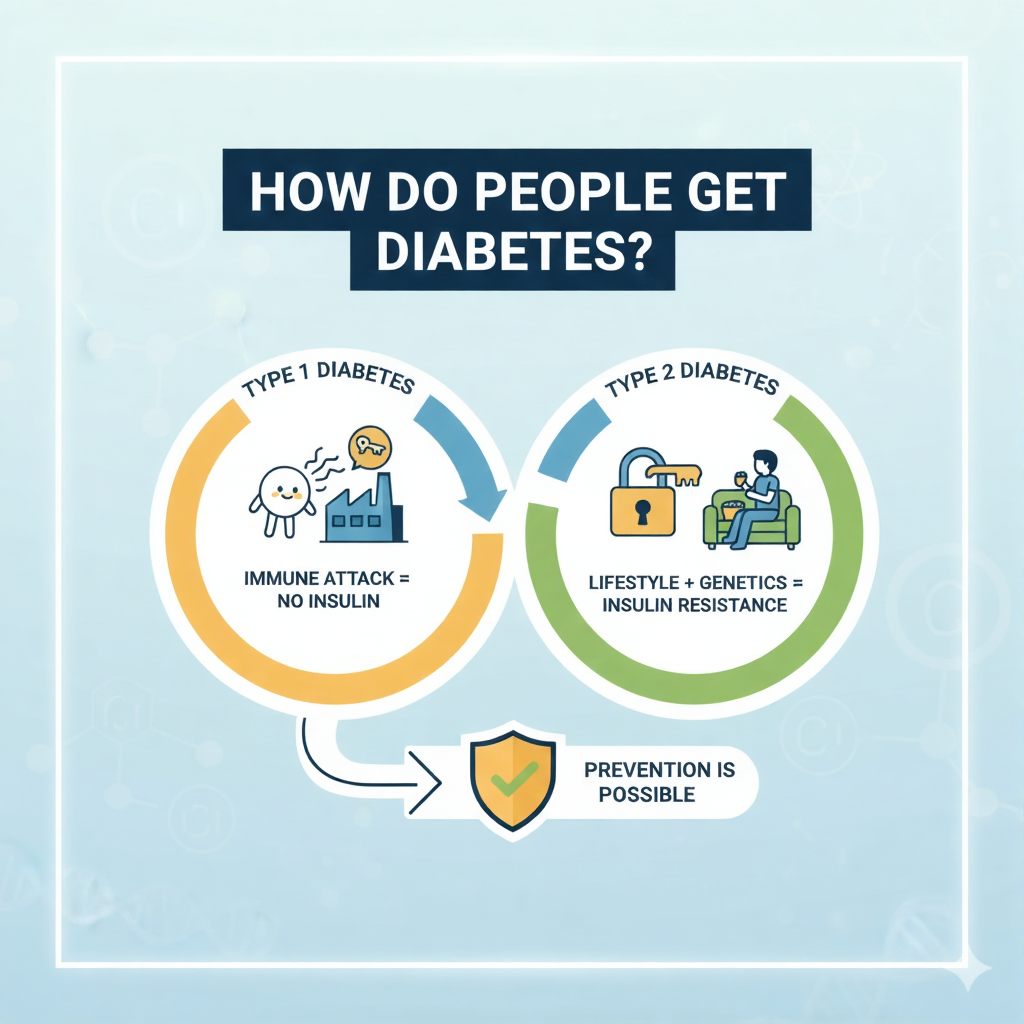
Diabetes is a serious but very common condition that affects how your body uses the fuel you get from food. It means your body has trouble keeping your blood sugar (glucose) at a healthy level. We are going to explain, in the simplest terms possible, how do people get diabetes by exploring the main types, the key causes, and the simple science behind it. Learning about this is the best way to protect your health and the health of your family. Understanding these basic facts is the first and most important step toward prevention and better health for yourself and your loved ones.
What is Diabetes and Why We Need to Talk About It
Think of your body as a car that runs on fuel. That fuel is a type of sugar called glucose, which comes from the food you eat. To get this fuel from your blood into the car’s engine (your cells), you need a key. That key is a hormone called insulin, which your body makes naturally in an organ called the pancreas.
When you have diabetes, that key (insulin) either doesn’t work right, or your body doesn’t make enough of it. Without working insulin, the glucose stays stuck in your bloodstream instead of going into your cells for energy. Over time, having too much sugar in your blood is harmful. This high blood sugar can damage important parts of your body, including your eyes, heart, kidneys, and nerves. That is the core of what is diabetes, and it’s why learning about this condition is so vital. We talk about it because millions of people worldwide have it, and many more are at risk without even knowing it.
It’s not just a minor issue; high blood sugar is like sand grinding away at the smooth machinery of your body. Because the damage happens slowly over years, people often don’t feel sick until the condition is very advanced. This quiet progression is what makes it so dangerous and why early knowledge and testing are crucial for everyone, regardless of age. We are interested not just in the causes but in the solutions for a healthy, long life.
The True Cost of High Blood Sugar
When your blood sugar stays high, it harms the tiny blood vessels first. These are the small highways that deliver oxygen and nutrients everywhere. When these highways get damaged, it leads to serious problems:
- Heart Disease: Diabetes significantly increases the risk of heart attacks and strokes.
- Kidney Damage (Nephropathy): The kidneys filter your blood. High sugar levels make them work too hard until they eventually wear out.
- Nerve Damage (Neuropathy): High sugar levels can harm the nerves, often starting in the feet and hands, leading to pain, tingling, or numbness.
- Vision Loss (Retinopathy): The small vessels in the eye can swell and leak, which can eventually cause blindness if not treated.
Understanding these risks shows why we need to treat the topic of diabetes with seriousness and detailed, clear information.
The Different Types: Understanding the Basics of This Condition
Diabetes isn’t just one single sickness; it shows up in a few different ways, depending on what causes the problem with insulin. Doctors often use the name diabetes mellitus to talk about this group of sugar-related conditions. Knowing the types of diabetes is crucial because the cause and the treatment for each type are very different.
There are three main types you should know about, and we’ll look at what makes each one unique:
1. Type 1 Diabetes: The Insulin Deficiency Problem
In Type 1, the problem is a complete lack of insulin production. The body needs outside help insulin shots or a pump to survive. This type is generally discovered quickly because symptoms appear suddenly and can be quite severe. It makes up only about 5–10% of all cases.
2. Type 2 Diabetes: The Insulin Resistance Problem
This is the vast majority of cases, making up 90–95%. Here, the body is resistant to the insulin it makes. It is closely linked to lifestyle factors, but genetics are still a significant part of the puzzle. Management usually involves diet, exercise, and sometimes pills or insulin. The symptoms are often mild or non-existent at first, which is why many people don’t know they have it for years.
3. Gestational Diabetes: The Pregnancy Hormones Problem
This affects women during pregnancy when hormones interfere with insulin action. Even though it is temporary for most women, it changes their long-term health outlook, requiring careful monitoring years later.
Understanding Pre-diabetes
We must also mention pre-diabetes. This is a crucial warning stage where blood sugar levels are higher than normal, but not high enough yet to be called full-blown diabetes. Think of this as the body waving a flag and saying, “We have a problem, and if you don’t change course, you will get sick.” The good news is that with simple changes to diet and exercise, pre-diabetes can often be reversed, preventing the full development of Type 2 diabetes.
Type 1 Diabetes: When the Body’s Immune System Makes a Mistake
Type 1 diabetes is not caused by eating too much sugar or being overweight. It is an autoimmune disease. This means the body’s own defence system, which is supposed to fight off germs and sickness, makes a serious mistake.
Imagine your defence system is like a specialized army. In Type 1 diabetes, this army accidentally targets and attacks the factory that makes insulin the beta cells inside the pancreas. Once those cells are destroyed, the body can no longer produce insulin on its own. It’s a permanent manufacturing shutdown.
We don’t know exactly what starts this attack, but scientists believe it is a combination of two things working together:
- Genetics: You can inherit a certain set of genes that makes your immune system more likely to make this mistake. If someone in your immediate family has Type 1, your risk is slightly higher. However, most people who get Type 1 do not have a family history of it.
- Environmental Triggers: Researchers think that exposure to certain viruses, possibly early in childhood, might act as the “switch” that turns on the faulty immune response in someone who is already genetically vulnerable.
Because the body is no longer producing its own insulin, people with Type 1 must take insulin every day. They must carefully count the carbohydrates in their food and match their insulin doses to what they eat and their activity levels. There is no way to prevent Type 1 diabetes today, but researchers are working hard to find ways to stop the immune attack before it destroys the insulin cells.
Key Signs of Type 1
The signs of Type 1 often come on quickly. Parents and individuals should look out for:
- Extreme thirst
- Frequent urination (especially bedwetting in children who previously did not)
- Extreme tiredness and fatigue
- Unexplained weight loss
Recognizing these fast-acting symptoms is essential because Type 1 can become dangerous very quickly if left untreated.
Type 2 Diabetes: How Lifestyle Choices and Genetics Play a Role
Type 2 diabetes is the condition people most often think of when they ask how do people get diabetes. Unlike Type 1, this type develops slowly over many years and is directly related to how the body uses insulin, plus a person’s life history.
The main problem here is insulin resistance. This is like having a key (insulin) that just won’t fit into the lock (the body’s cells). The cells have become stubborn and ignore the insulin’s signal to let glucose in. Because the sugar stays outside in the blood, the pancreas tries to help by making more and more insulin. It works overtime, producing huge amounts of insulin to force the cells to respond.
This works for a while, but eventually, the pancreas gets tired, worn out, and can’t keep up with the demand. At that point, the body doesn’t produce enough insulin and the cells are still resistant. This is when blood sugar levels get dangerously high, leading to Type 2 diabetes.
A mix of factors can lead to this resistance:
- Weight and Body Fat: Having extra weight, especially around the middle (visceral fat), makes your cells much more resistant to insulin. This is the single biggest risk factor for Type 2.
- Physical Inactivity: Moving your body helps your cells use insulin better. When you exercise, your muscles absorb glucose directly from the blood without needing as much help from insulin. If you don’t move much, your cells become less sensitive to the hormone.
- Age: The risk goes up as you get older, particularly after age 45. Decades of gradual insulin resistance add up.
- Genetics/Family History: This is a strong link. If your mother, father, brother, or sister has Type 2 diabetes, your risk is much higher, even if you follow a perfect diet. You inherit the tendency toward resistance.
- Race and Ethnicity: Certain racial and ethnic groups, including African Americans, Hispanic/Latinx Americans, and Native Americans, have a higher risk of developing Type 2 diabetes.
This condition affects people globally, whether they live in a rural area or a huge place like London. The combination of inherited risk factors and long-term lifestyle habits is what causes most cases of Type 2 diabetes. The good news is that because lifestyle plays such a big part, it also means prevention is possible.
Gestational Diabetes: What Happens During Pregnancy
Gestational diabetes is a unique and temporary type of the condition that only develops during pregnancy. It’s important because it affects both the mother and the baby.
When a woman is pregnant, her body makes special hormones that help the baby grow. Unfortunately, these hormones can sometimes block the mother’s insulin from doing its job, which creates temporary insulin resistance. Because the mother’s cells are resisting the insulin, her blood sugar levels go up. This is very similar to what happens in Type 2, but the cause is the pregnancy hormones, not years of resistance.
Doctors screen for this condition (usually around the 24th to 28th week of pregnancy) because it needs to be managed quickly to protect the health of the baby. High blood sugar in the mother can lead to the baby growing too large, making delivery difficult, or causing the baby to have low blood sugar right after birth.
The good news is that for most women, blood sugar returns to normal right after the baby is born. However, the experience serves as an important warning: having gestational diabetes means the mother and the child both have a significantly higher risk of developing Type 2 diabetes later in life. This is why regular checkups and a continued focus on a healthy lifestyle are absolutely crucial even after the pregnancy is over. It serves as a chance to hit the reset button on long-term health habits.
The Science Behind It: Understanding Insulin and Blood Sugar
The Fuel Source: Glucose
When you eat food, especially carbohydrates found in bread, pasta, rice, potatoes, fruit, or sweets your digestive system breaks it down into glucose. This glucose is then absorbed into your bloodstream and travels to every cell in your body. Every cell uses this glucose as its primary source of energy, whether you are running a race or just thinking hard.
The Key: Insulin
The job of insulin, made by the pancreas, is to act as the traffic controller or the “key.” When insulin detects glucose in the blood, it signals the cells to open up and take the glucose in. Insulin is the messenger telling the muscle and fat cells, “Open up! The fuel is here.”
When everything works right, the perfect amount of glucose moves from the blood into the cells, keeping the blood sugar levels balanced, not too high and not too low. This is called homeostasis, or balance.
What Happens When the System Fails
When someone has diabetes, that smooth, balanced process breaks down:
- In Type 1: No insulin means no key. Glucose piles up in the bloodstream outside the cells.
- In Type 2: The cells are deaf to the insulin key (resistance), so glucose still piles up in the bloodstream.
When blood sugar is too high for too long, it’s called hyperglycemia, and that is what causes damage to the blood vessels and nerves over time. Conversely, if too much insulin is given, or if a person with diabetes doesn’t eat enough, blood sugar can drop too low (hypoglycemia), which is also dangerous and requires immediate treatment. This simple science is central to living with or preventing this condition.
Key Risk Factors: Who Needs to Pay Closer Attention?
While everyone should know the basics of diabetes, some people need to be more aware because they have certain risk factors. Knowing these factors does not mean you will definitely get the condition, but it means you should take extra care and talk to your doctor regularly.
Here are the main risk factors for Type 2 diabetes, which account for the vast majority of cases:
- Family History is a Big One: Having a parent or sibling with Type 2 diabetes means genetics put you on the alert list. This is a risk you cannot change, so you must focus harder on the risks you can control.
- Carrying Extra Weight: This is the most controllable factor. The more fat tissue you have, especially around your abdomen, the more resistant your cells become to insulin. Losing just 5–7% of your body weight can dramatically cut your risk.
- Inactivity: Exercising less than three times a week is a risk factor. Movement helps your muscles burn more glucose, making your cells sensitive and efficient again.
- High Blood Pressure or High Cholesterol: These conditions often happen alongside the insulin resistance that causes diabetes. If you have one, you should be checked for the others.
- Polycystic Ovary Syndrome (PCOS): This condition in women is strongly linked to insulin resistance and increases the risk of developing Type 2.
If you have a few of these factors, paying close attention to any possible early symptoms, like feeling very thirsty or needing to go to the bathroom often, becomes even more important. Early signs might also include recurring infections, slow-healing sores, or tingling in the hands or feet. This kind of expert advice is what we offer at Books_WD to help you stay informed and proactive about your health journey. We believe in knowledge as the best prevention tool.
Testing for Diabetes
The test for diabetes is simple, usually involving a small blood sample. The three most common tests are:
- Fasting Plasma Glucose (FPG) Test: Checks your blood sugar after you haven’t eaten for at least eight hours.
- A1C Test: This test shows your average blood sugar level over the past two to three months. It gives a big picture look at your health.
- Oral Glucose Tolerance Test (OGTT): Measures your blood sugar before and two hours after you drink a sugary liquid.
If you have risk factors, ask your doctor to test you. It’s a simple conversation that can change your health in the future dramatically.
Understanding Your Risks: A Simple Checklist for Better Health
Taking charge of your health doesn’t have to be complicated. It’s all about making small, clear choices every day. To help you understand and manage your personal risk for Type 2 diabetes, here is a simple checklist based on the things we know make a difference these actions are based on real-world experience and scientific facts:
- Move More, Sit Less: Try to be active for at least 30 minutes of moderate-intensity activity most days of the week. This does not mean running a marathon; it could be a brisk walk, dancing, or even gardening. Breaking up long periods of sitting is also key.
- Choose Whole Foods: Focus on foods that are closer to their natural state, like vegetables, fruits, and whole grains. They are full of fiber, which helps your body slow down how fast it absorbs glucose. Try to cut back on processed foods, sugary drinks, and anything made with white flour.
- Prioritize Sleep: Getting consistent, good quality sleep (about 7–8 hours for most adults) helps regulate the hormones that control hunger and insulin sensitivity. Poor sleep can actually increase insulin resistance.
- Manage Stress: Long-term stress causes your body to release hormones like cortisol, which temporarily raise blood sugar. Finding healthy ways to manage stress, through hobbies, mindfulness, or quiet time, is an important, often overlooked part of prevention.
- Know Your Numbers: Keep track of your weight, blood pressure, and cholesterol levels. If these numbers start to creep up, it is a sign that your body’s systems are getting stressed.
By checking off these items, you are actively working to keep your body sensitive to insulin and reduce your chances of developing this condition. This proactive approach builds a foundation of Trustworthiness in your relationship with your own body and your healthcare providers.
Taking Control: The Next Steps for Prevention and Management (Books_WD)
The most empowering part of learning about diabetes is realizing how much control you have, especially with Type 2. The answers to how do people get diabetes often lead back to controllable factors like diet, activity, and overall body weight. This means you can choose a different path, even if genetics are against you.
Prevention and management both rely on the same fundamental principle: helping your body manage glucose better.
Prevention for High-Risk Individuals
If you have pre-diabetes, the goal is reversal. Studies show that a combination of a healthy diet and 150 minutes of exercise per week can lower your risk of developing Type 2 diabetes by over 50%. This is the time to act decisively and implement the checklist from the previous section.
Management for People with Diabetes
If you already have a diagnosis, effective management is essential to prevent long-term complications. This involves:
- Medication Adherence: Taking any prescribed medications (pills or insulin) exactly as your doctor tells you.
- Regular Monitoring: Checking your blood sugar levels as directed to understand how different foods and activities affect you.
- Medical Team: Working closely with your doctor, a diabetes educator, and a dietitian. This team approach gives you the best chance for stable blood sugar.
We believe that being informed is the best defence against any health issue. For more in-depth guides on managing your health, including easy-to-understand information on nutrition, meal planning, and exercise routines, be sure to check out the resources from Books_WD. We focus on breaking down complex health topics into simple, actionable steps you can start today, ensuring you have the experience-based knowledge you need to live well.
Need more practical tools to help you stay on track with a healthy, balanced lifestyle? Explore our expert guides and simple recipe collections designed to make living well both easy and delicious. Start your journey toward better health today.

