


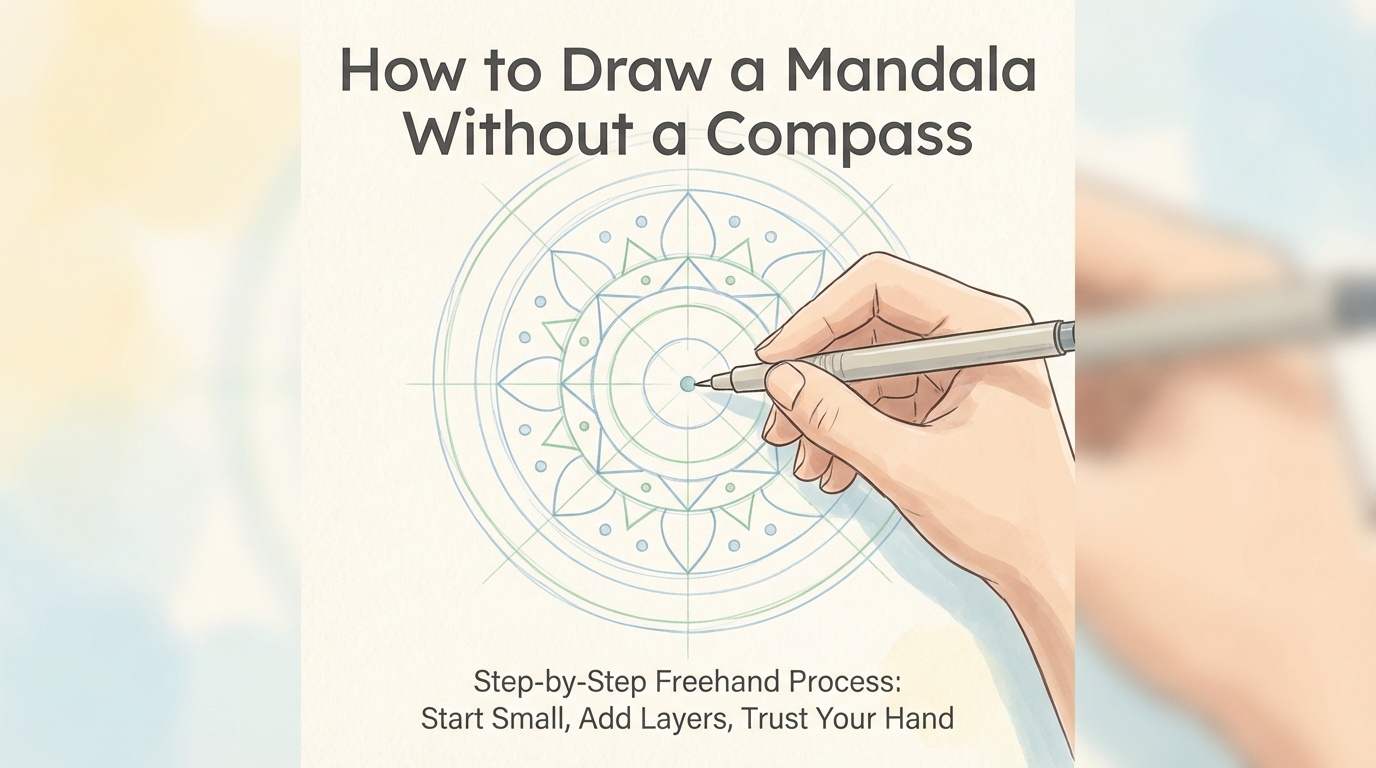
Drawing a mandala without a compass is not only achievable but also allows for a more free-flowing, creative process. With just a few simple tools and techniques, you can create intricate, beautiful mandalas freehand. Whether you’re a beginner or experienced artist, mandala drawing is a great way to enhance focus, relieve stress, and enjoy art. This guide will help you get started on how to draw a mandala without a compass, giving you all the tools you need to create your own unique design.
Introduction: Understanding Mandala Art
Mandalas have been cherished for centuries, symbolizing wholeness, unity, and balance. Originating from ancient cultures, they have appeared in art, spirituality, and healing practices. While many artists traditionally used tools like compasses to draw perfect circles for mandalas, today, many artists prefer a more organic approach drawing mandalas without a compass.
Freehand mandala drawing allows for personal creativity, offering more flexibility and spontaneity than the rigid, mechanical method of using a compass. In this article, we’ll guide you through the process of creating your own mandalas without using any tools other than your hands and imagination.
What is Mandala Drawing?
Mandalas are circular designs filled with geometric patterns that radiate from a central point. The name “mandala” is derived from the Sanskrit word for circle, and these designs are seen as symbols of the universe, unity, and harmony.
While some mandalas require precise tools for perfect symmetry, freehand mandalas are more intuitive and allow you to express yourself in a less rigid way. Mandala drawing can serve as a form of meditation, helping to calm the mind and focus attention on the present moment. It’s an art form that anyone can try, regardless of skill level.
Why Draw a Mandala Without a Compass?
There are several reasons why drawing a mandala freehand might be a preferable approach for some:
- Creative Freedom: Without the constraints of a compass, you can embrace your creativity fully. You’ll have more flexibility to experiment with shapes, lines, and patterns.
- Personal Touch: Creating mandalas by hand gives you the opportunity to inject your personal style into the artwork, making it more unique.
- No Need for Special Tools: You can create beautiful mandalas with just a pencil, paper, and ruler no compasses or specialized equipment required.
- Stress Relief and Mindfulness: The process of drawing mandalas can be meditative. Without focusing on perfection, you can simply relax and enjoy the act of creating.
How to Draw a Mandala Without a Compass: Step-by-Step
Drawing mandalas without a compass may seem intimidating, but once you break it down into simple steps, the process becomes more accessible. Here’s a step-by-step guide to drawing your first mandala freehand:
1. Choose Your Paper and Tools
For beginners, it’s best to start with basic materials:
- A piece of plain paper (preferably a thicker sheet if using markers or paints)
- A pencil for initial sketches
- A ruler for straight lines (optional)
- Eraser
- Colored pens, pencils, or markers for finishing the design
2. Draw the Center Point
Start by drawing a small dot in the middle of your paper. This will be the focal point of your mandala. The center is the heart of your design, and everything will radiate out from this point.
3. Create Guidelines (Optional)
To help guide your design, lightly draw lines from the center point. These lines will serve as the framework for your mandala. You can divide the paper into 4, 6, or 8 sections, depending on how intricate you want your mandala. These lines will help you create symmetry.
4. Start Drawing Shapes and Patterns
Once your guidelines are in place, begin drawing shapes around the center. You can start with basic geometric shapes like triangles, squares, or circles. Add more layers by repeating and expanding on these shapes.
5. Add Detail and Texture
Once you’ve established the basic structure, begin adding more detailed patterns inside each section. You can use dots, lines, or curves to create intricate designs. Focus on symmetry, but don’t be afraid to embrace imperfection, as it will give the mandala character.
6. Continue Layering Patterns
Continue adding more layers of patterns around the central design. Each new layer should build upon the one before it, creating a sense of movement and flow outward. You can mix different shapes, lines, and even nature-inspired designs such as flowers or leaves.
7. Finalize Your Mandala
Once you’re satisfied with the shapes and patterns, go over your lines with a dark pen or marker to make them stand out. Erase any unnecessary pencil marks, and then add color to your mandala to complete it. Choose colors that resonate with you and reflect the mood you want to express.
How to Create Mandalas by Hand: Tips and Tricks
- Be Patient: Mandala drawing is a slow and deliberate process, but it’s also very therapeutic. Don’t rush. Allow yourself to get lost in the pattern-making.
- Focus on Symmetry: While you don’t need a compass to achieve symmetry, try to ensure that your patterns remain balanced and harmonious as they radiate outward.
- Use a Variety of Patterns: Experiment with different types of patterns. Use dots, lines, curves, and nature motifs to keep the design interesting.
- Relax: Don’t stress over the imperfections. Mandalas are all about creativity and expression. Let your mind wander as you draw.
Mandala Drawing for Beginners: Common Mistakes to Avoid
While creating mandalas freehand, beginners may encounter a few common pitfalls. Here’s how to avoid them:
- Overcomplicating the Design: Start with simple shapes and patterns before adding intricate details. Don’t feel the need to make your first mandala overly complex.
- Forgetting the Center Point: The center is key in a mandala. Always make sure it’s clear, as it serves as the foundation for your design.
- Lack of Symmetry: While perfect symmetry isn’t required, aim for balance. You don’t want one side of your mandala looking very different from the other unless it’s part of your design.
- Not Taking Breaks: Mandala drawing can be a long process. Take regular breaks to prevent burnout and give your mind a chance to refresh.
Mandala Art Techniques Without Compass: Exploring Other Styles
Creating mandalas without a compass can be done in various styles. Here are a few examples:
- Geometric Mandalas: Focus on simple geometric shapes such as triangles, squares, and circles. These can be drawn freehand and still look intricate.
- Nature-Inspired Mandalas: Incorporate elements like flowers, leaves, and stars into your mandala designs. These can give a natural feel without relying on exact measurements.
- Abstract Mandalas: Break free from traditional patterns and experiment with free-form shapes and lines that flow outward from the center.
Mandala Drawing Tips for Enhancing Your Designs
Here are a few tips to take your freehand mandala designs to the next level:
- Use Different Line Thickness: Varying the thickness of your lines can help create visual contrast and depth in your mandala.
- Add Color Gradients: Use color gradients to give your mandala a 3D effect. Lighter colors in the center and darker hues on the outer edges can enhance the depth.
- Experiment with Shapes: Don’t limit yourself to traditional shapes. Experiment with waves, spirals, and other unconventional forms.
Why Freehand Mandala Drawing is Worth It
Learning how to draw a mandala without a compass offers not only an artistic outlet but also a method for relaxation and mindfulness. The process is therapeutic, creative, and deeply personal. You don’t need special tools just paper, pens, and your imagination to create intricate designs that speak to you.
If you’re ready to start your mandala journey, get your materials, follow the steps above, and embrace the beauty of creating something truly unique.

