


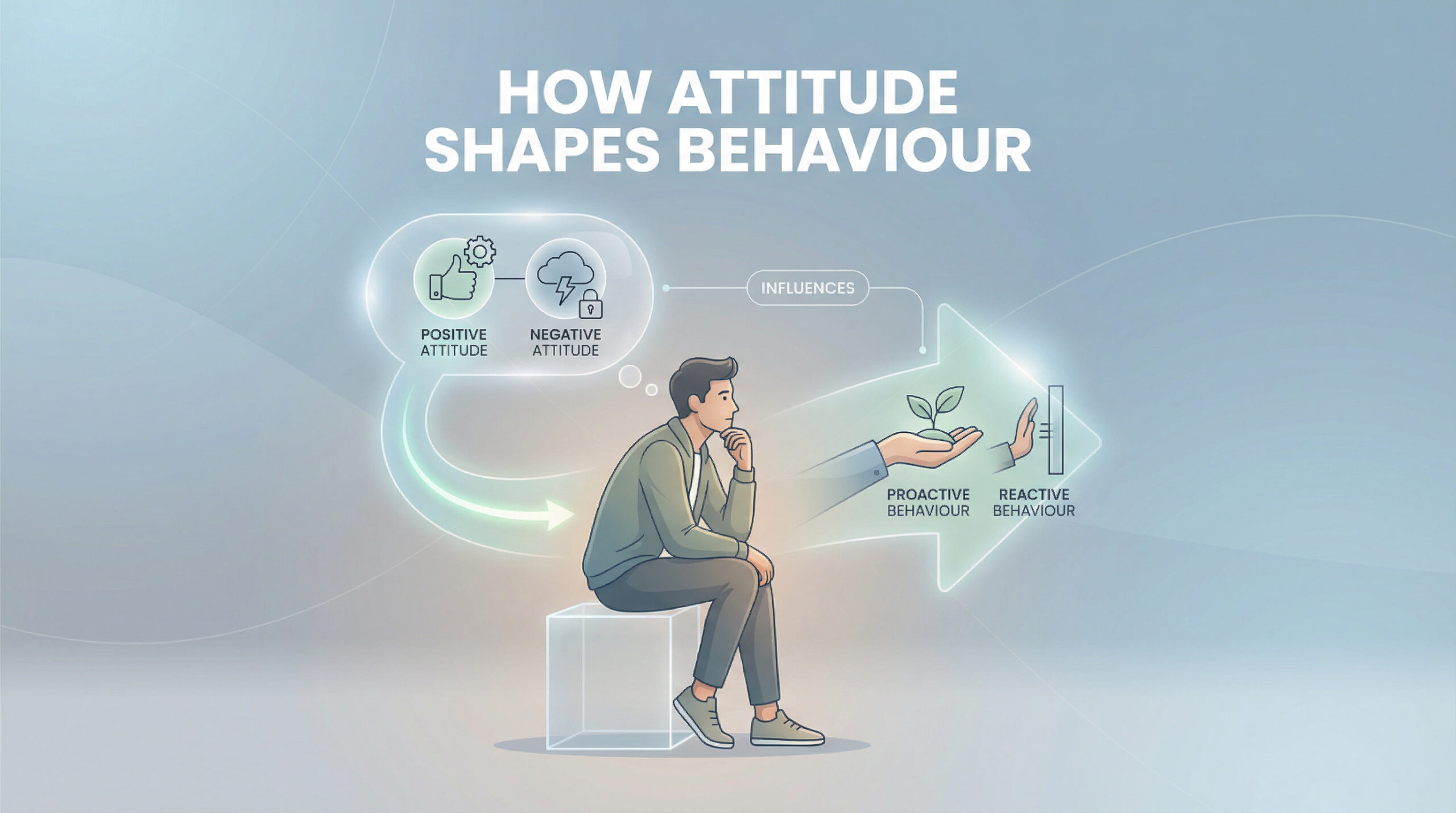
The relationship between attitude and behaviour is a fundamental concept in psychology, as it explains how our mental state influences our actions. Attitude refers to our feelings, beliefs, and evaluations about people, objects, or situations, while behaviour is how we act in response to those attitudes. In simple terms, our attitudes often guide our actions, but external influences can sometimes lead to inconsistencies between them. Understanding this connection can help improve decision-making, enhance personal growth, and create better social interactions.
What is the Relationship Between Attitude and Behaviour?
Attitude and behaviour are closely related, but they don’t always align perfectly. Our attitudes often shape how we behave, but external factors such as social norms, peer influence, or situational context can cause discrepancies between what we feel and how we act. The connection is rooted in psychology, where researchers have explored how beliefs, emotions, and intentions translate into observable actions.
Attitudes can influence how we respond to different situations, and the way we behave can, in turn, reinforce or challenge our attitudes. For example, if you have a positive attitude towards exercising, you’re more likely to engage in physical activities. However, if social pressure or lack of time interferes, your behaviour might not always align with your attitude.
Why Does Attitude Influence Behaviour?
Attitudes influence behaviour because they are central to how we process information and make decisions. Our attitudes shape our perceptions, which then guide how we react to the world around us. The more strongly we feel about something, the more likely it is that our actions will reflect those feelings. This process is often explained by the Theory of Planned Behaviour, which suggests that our intentions, influenced by our attitudes, are the best predictors of actual behaviour.
For example, if someone has a strong belief in the importance of environmental conservation (positive attitude), they are more likely to adopt eco-friendly behaviours, such as recycling or using sustainable products. The connection between attitude and behaviour is also affected by the strength of our attitudes and the perceived ease of performing the behaviour.
How Does Behaviour Reflect Our Attitudes?
Our behaviour often reflects our underlying attitudes, especially when we feel confident in our beliefs and have the freedom to act upon them. For instance, if someone has a positive attitude towards healthy eating, their actions will likely reflect this by choosing nutritious foods, avoiding junk food, or promoting healthy eating to others.
However, there are situations where behaviour does not perfectly align with attitude. This discrepancy can happen due to various factors, such as environmental influences, lack of motivation, or situational constraints. In these cases, the individual’s attitude may not lead to the desired behaviour, resulting in cognitive dissonance the discomfort experienced when one’s actions do not align with their beliefs.
Does Attitude Always Predict Behaviour?
No, attitude does not always predict behaviour. While our attitudes provide a guideline for how we might act, external influences such as social expectations, pressure from others, or situational factors can override our internal beliefs. This can create a situation where we act in ways that are inconsistent with our attitudes.
For instance, someone may have a positive attitude towards healthy eating but may end up eating fast food in a social setting due to peer influence or convenience. In this case, the behaviour (eating fast food) doesn’t align with the person’s attitude (healthy eating).
How Do Attitudes and Actions Interact to Shape Our Decisions?
Attitudes and actions interact in a dynamic way. When we act in alignment with our attitudes, the action can reinforce the attitude, creating a feedback loop. For example, if a person has a positive attitude towards volunteering, they may engage in volunteering activities, which in turn strengthens their belief in helping others.
On the other hand, if a person behaves in a way that contradicts their attitude (such as acting selfishly despite believing in the importance of kindness), this can lead to cognitive dissonance. In order to resolve this discomfort, the individual may adjust their attitude to match their behaviour, or they may justify the action to avoid the discomfort.
What Is the Difference Between Attitude and Behaviour?
The difference between attitude and behaviour lies in the distinction between mental states and observable actions. Attitude refers to the internal thoughts, feelings, and evaluations we hold about a person, object, or idea. It’s our mental framework for interpreting the world. Behaviour, however, is the external manifestation of our thoughts and attitudes through actions.
For example, a person may have a positive attitude towards education (thinking that learning is important) but may display a lack of effort in their studies due to external factors, such as a lack of motivation or distractions. In this case, the person’s attitude (valuing education) doesn’t necessarily match their behaviour (not studying).
Why Is Attitude-Behaviour Consistency Important?
Attitude-behaviour consistency is essential because it reflects authenticity and integrity. When a person’s actions are consistent with their attitudes, it builds trust and credibility. This consistency also helps in maintaining personal well-being and social harmony. When people behave in a way that aligns with their attitudes, they experience greater internal satisfaction and less cognitive dissonance.
For example, someone who values honesty will likely be truthful in their actions, which strengthens their sense of integrity and trustworthiness. Consistency in attitude and behaviour is vital for personal growth and maintaining positive relationships.
How Do External Factors Influence the Relationship Between Attitude and Behaviour?
External factors such as societal norms, peer pressure, and environmental cues play a significant role in shaping the relationship between attitude and behaviour. Even if a person holds a strong attitude towards a certain belief, these external factors can lead them to act in a way that is inconsistent with their attitude.
For instance, someone who has a positive attitude towards sustainable living may still buy a plastic water bottle if they are in a situation where that is the only option available. The external factor (lack of alternatives) influences the person’s behaviour, despite their positive attitude towards the environment.
How Can We Improve Our Attitude-Behaviour Connection?
Improving the connection between attitude and behaviour involves self-awareness and intentional actions. By reflecting on where your attitudes and behaviours do not align, you can take steps to close the gap. This might involve setting clear goals, seeking external support, or gradually changing habits to match your beliefs.
For example, if you want to live a more active lifestyle (attitude), you can start by scheduling regular exercise sessions (behaviour) and finding motivation through social support or positive reinforcement.
Conclusion
The relationship between attitude and behaviour is complex but important for understanding how we act and think. While attitudes are central to shaping our actions, external influences and situational factors can cause discrepancies. Improving the alignment between attitude and behaviour is a key step toward personal development, and can enhance your decision-making and relationships.
Are you ready to improve your attitude-behaviour connection? Start by reflecting on your beliefs and consciously aligning your actions to match them. At Books_WD, we support your journey of self-discovery and growth, providing the resources you need to understand how psychology influences every aspect of your life.

