


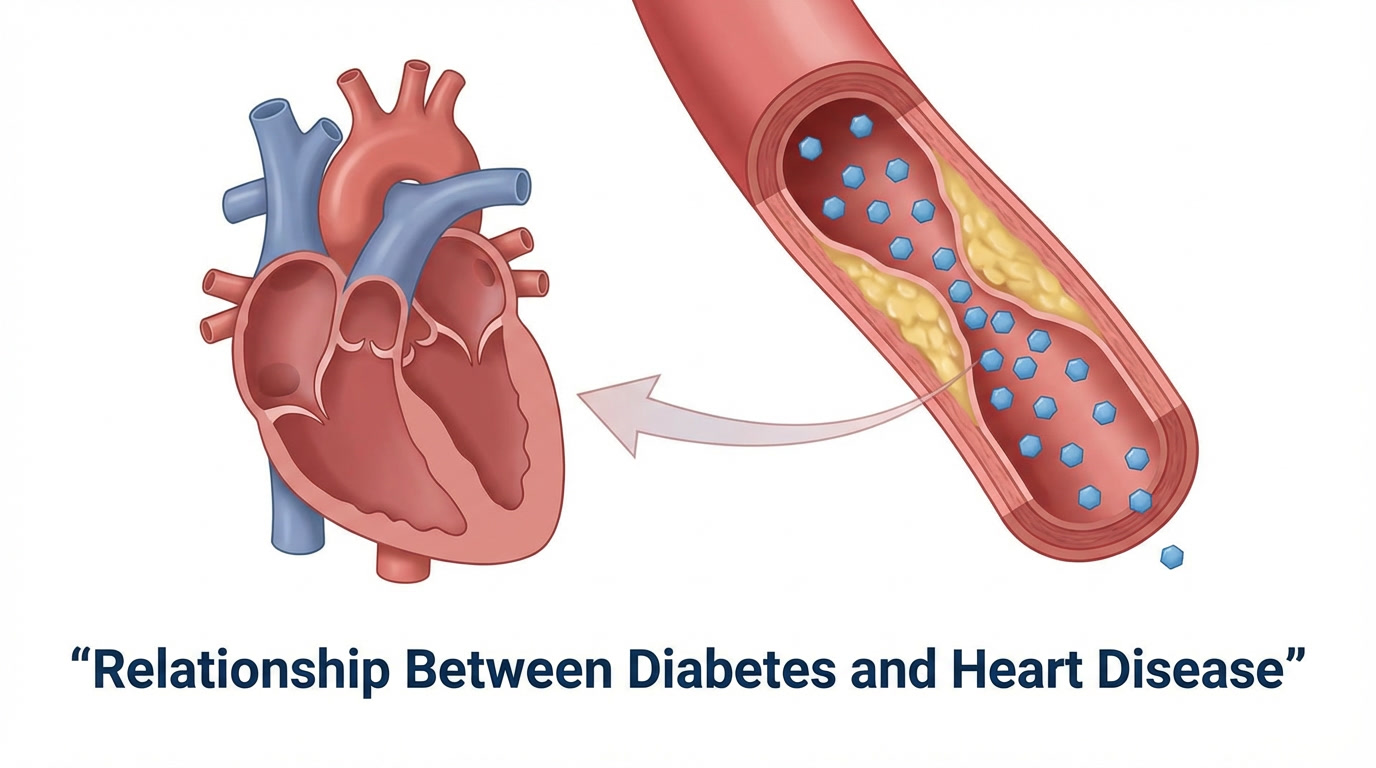
The relationship between diabetes and heart disease is direct and well established. Diabetes raises blood sugar levels, which damages blood vessels and nerves over time. This damage increases the risk of heart disease by making arteries stiff, narrow, and inflamed, leading to problems such as heart attacks, stroke, and poor blood flow.
People with diabetes are more likely to develop heart disease earlier and experience more severe heart-related complications. Proper blood sugar control, healthy lifestyle habits, and early medical care can greatly reduce this risk.
What Is the Relationship Between Diabetes and Heart Disease?
The relationship between diabetes and heart disease is one of cause and long-term damage. Diabetes affects how the body handles sugar in the blood. When blood sugar stays high for too long, it slowly harms the blood vessels and the nerves that control the heart.
Heart disease develops when blood vessels become narrow or blocked. Diabetes speeds up this process. This is why heart disease in people with diabetes is more common than in people without diabetes.
Doctors and researchers have studied this connection for many years. They agree that diabetes increases the risk of heart disease even if no symptoms appear early on. This makes diabetes a major risk factor for heart problems.
In simple terms:
- Diabetes damages blood vessels
- Damaged blood vessels strain the heart
- Over time, heart disease develops
This connection explains why heart health is a top concern for anyone living with diabetes.
Why Does Diabetes Increase the Risk of Heart Disease?
Diabetes increases the risk of heart disease because high blood sugar affects many systems in the body at the same time. The damage does not happen overnight. It builds slowly, often without clear warning signs.
Here are the main reasons why diabetes increases heart disease risk:
- High blood sugar irritates and inflames blood vessel walls
- Cholesterol builds up more easily in damaged arteries
- Blood pressure often rises in people with diabetes
- Blood flow becomes weaker and less flexible
These changes raise diabetes heart disease risk even when a person feels fine. Over time, the heart must work harder to pump blood through damaged vessels. This stress can lead to heart attacks or heart failure.
Medical experience shows that people with diabetes often develop heart disease earlier in life. This makes early prevention extremely important.
How Does Diabetes Affect Heart Health Over Time?
Diabetes affects heart health slowly and quietly. Many people live with diabetes for years before heart symptoms appear. During that time, damage continues inside the body.
High blood sugar and heart problems often develop together through these steps:
- Blood sugar stays high after meals
- Blood vessels lose flexibility
- Inflammation increases inside artery walls
- Fat and cholesterol stick to damaged areas
- Blood flow becomes restricted
As this process continues, the heart receives less oxygen-rich blood. This raises the risk of chest pain, shortness of breath, and heart attacks.
From a clinical perspective, doctors see that long-term diabetes causes more severe heart disease than short-term cases. This highlights the importance of early diagnosis and steady management.
What Is the Link Between Diabetes and Cardiovascular Disease?
The link between diabetes and cardiovascular disease lies in how diabetes affects the entire circulatory system. Cardiovascular disease includes conditions such as heart disease, stroke, and blocked arteries.
Cardiovascular disease and diabetes often appear together because:
- Diabetes damages large and small blood vessels
- Blood becomes thicker and harder to move
- Inflammation increases throughout the body
This combination raises the chance of blocked arteries, also known as atherosclerosis. Diabetes and clogged arteries are closely connected due to repeated vessel damage.
Medical studies confirm that people with diabetes face a much higher risk of cardiovascular disease compared to those without diabetes. This makes heart screening a routine part of diabetes care.
How Do High Blood Sugar and Insulin Resistance Damage the Heart?
High blood sugar and insulin resistance play a major role in heart damage. Insulin resistance means the body does not use insulin well, causing sugar to stay in the bloodstream.
This leads to insulin resistance and heart disease through several pathways:
- Sugar damages artery lining
- Inflammation increases inside vessels
- Fat storage around the heart increases
- Blood pressure rises
Inflammation, heart disease, and diabetes often occur together. Chronic inflammation weakens blood vessels and makes plaque buildup worse.
Doctors often see that people with insulin resistance develop heart problems even before diabetes is fully diagnosed. This shows how early the damage can begin.
Does Type 1 or Type 2 Diabetes Carry a Higher Heart Disease Risk?
Both types increase heart disease risk, but they affect the body differently.
Type 1 diabetes and heart disease
- Begins early in life
- Requires lifelong insulin use
- Long-term exposure raises heart risk
Type 2 diabetes and heart disease
- Often linked to insulin resistance
- Strongly connected to weight and lifestyle
- More common overall
Type 2 diabetes and heart disease are more frequently linked because type 2 diabetes affects more adults and often appears with high blood pressure and cholesterol problems.
From clinical experience, doctors monitor heart health closely in both types, with extra focus on type 2 due to added risk factors.
What Cardiovascular Risk Factors Are Common in People With Diabetes?
People with diabetes often face multiple cardiovascular risk factors at the same time. These factors combine and raise heart disease risk faster.
Common cardiovascular risk factors in diabetes include:
- Diabetes and high blood pressure risk
- High LDL cholesterol
- Low HDL cholesterol
- Excess body weight
- Low physical activity
These factors make blood vessels narrower and stiffer. Blood sugar control and heart health improve when these risks are managed together rather than separately.
Healthcare professionals emphasize treating the whole person, not just blood sugar numbers.
What Are the Early Heart Disease Symptoms in Diabetics?
Heart disease symptoms in diabetics may appear differently than in people without diabetes. Nerve damage caused by diabetes can dull pain signals.
Common warning signs include:
- Shortness of breath
- Fatigue during mild activity
- Chest discomfort rather than sharp pain
- Swelling in legs or feet
Some people experience silent heart disease with no pain at all. This makes regular checkups essential.
Doctors often rely on testing rather than symptoms alone when assessing heart disease risk in diabetics.
How Can Diabetes Management Help Prevent Heart Disease?
Diabetes management to prevent heart disease focuses on steady control rather than quick fixes. Small daily habits create the biggest long-term impact.
Effective strategies include:
- Maintaining healthy blood sugar levels
- Managing cholesterol problems
- Keeping blood pressure within safe limits
- Eating balanced meals
- Staying physically active
Blood sugar control and heart health improve together when these steps are followed consistently. Medical experience shows that people who manage diabetes well live longer with fewer heart problems.
Books_WD emphasizes education and awareness to help readers understand how daily choices affect long-term health outcomes.
Conclusion
The connection between diabetes and heart disease is strong, predictable, and preventable with the right care. Diabetes damages blood vessels through high blood sugar, inflammation, and insulin resistance. Over time, this damage leads to heart disease, cardiovascular complications, and reduced quality of life.
Understanding how diabetes leads to heart disease empowers people to act early. With proper management, regular monitoring, and informed lifestyle choices, heart risks can be lowered significantly.
At Books_WD, the goal is to provide clear, trustworthy health information that helps readers make confident decisions about their well-being.
Taking action today can protect heart health for years to come.

