


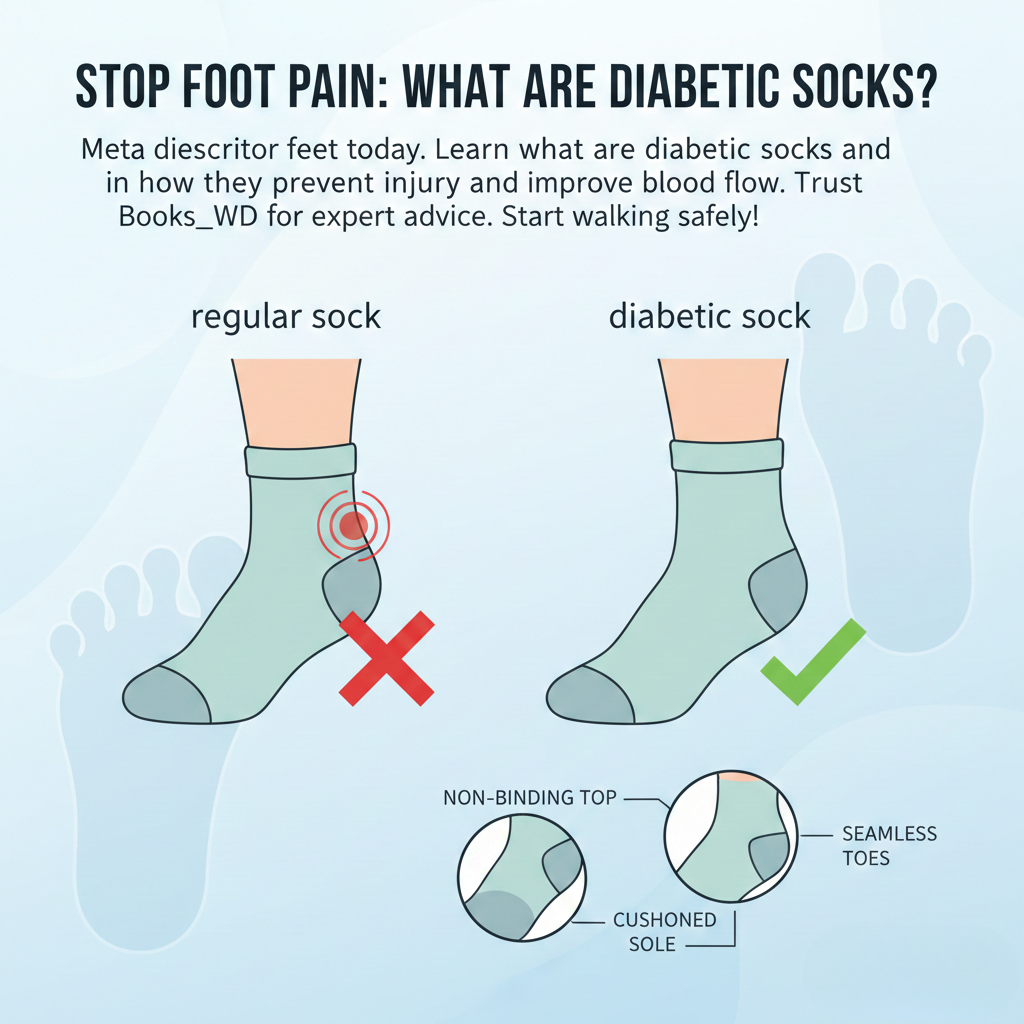
What are diabetic socks? Diabetic socks are specialized footwear designed to protect feet from injury and improve circulation by using non-binding tops, seamless construction, and moisture-wicking fabrics. Unlike regular socks, they do not have tight elastic that pinches the leg, which helps blood flow more easily. They also feature extra padding and light colors to help users spot small cuts or blisters early. These socks are essential for people with diabetes because they reduce the risk of infections and foot ulcers caused by poor circulation or nerve damage. Using the right socks, like those discussed by Books_WD, is a simple way to stay active and safe.
Introduction to specialized footwear for foot health
Most of us put on our socks every morning without giving them a single thought. We pick a pair that matches our shoes or feels soft, and then we go about our day. However, for many people, a pair of socks is much more than just a piece of clothing. It is a tool for staying healthy. When you have certain health conditions, the small details in your clothing can make a huge difference in how you feel.
Footwear is the foundation of our movement. If your feet are uncomfortable or injured, it changes how you walk and how much you can get done. Specialized footwear is designed to protect the body from small problems that could turn into big ones. By choosing the right materials and the right fit, you are making a smart investment in your long-term wellness.
In this guide, we are going to look at one of the most helpful tools for foot care: diabetic socks. You will learn what diabetic socks are, how they differ from the ones in your dresser right now, and why they are such a popular choice for people looking to stay comfortable and safe. Books_WD aims to make this information easy to understand so you can make the best choice for your feet.
Why foot care matters for people with diabetes
To understand why a specific type of sock is necessary, we first have to look at how diabetes affects the body. When someone has diabetes, their blood sugar levels can sometimes stay higher than they should. Over a long period, high blood sugar can cause two main issues in the feet.
The first issue is related to blood flow. Good circulation is like a highway system that delivers nutrients and oxygen to your toes. If that highway gets backed up, injuries take a lot longer to heal. The second issue involves the nerves, a condition called neuropathy. Some people experience a tingling or numbing feeling in their feet. If you cannot feel your feet perfectly, you might not notice a small pebble in your shoe or a blister forming on your heel.
This is why the benefits of diabetic socks are so important. These socks act as a protective layer. They help prevent the skin from rubbing against the shoe and keep the feet in a healthy environment. By paying attention to foot care today, people can avoid complications tomorrow. It is all about being proactive rather than waiting for a problem to happen.
What is a diabetic sock, and how is it different?
To give you a clear-cut answer: a diabetic sock is a specially designed garment that protects the feet from pressure, reduces moisture, and does not restrict blood flow. While a normal sock uses a tight elastic band at the top to stay up, a diabetic sock is built to stay in place without squeezing your leg.
The main difference lies in the construction. If you look at a regular sock, you will usually see a thick seam across the toes. In a diabetic sock, that seam is either gone or made to be very flat. This is what people call seamless diabetic socks. By removing that lumpy seam, the sock eliminates the main cause of rubbing and irritation.
Another big difference is the “top” of the sock. Most socks leave a red ring around your calf at the end of the day. That ring is a sign that the sock was tight. Diabetic versions are non-binding socks, meaning they are stretchy and loose enough to allow blood to move freely while still covering the foot securely. This makes them much more comfortable for all-day wear.
How do diabetic socks work to protect your feet?
The way these socks work is actually quite scientific, even though they look like regular clothing. Their first job is to manage moisture. Most are made from synthetic blends or special wool that pulls sweat away from the skin. Keeping feet dry is vital because bacteria and fungus love damp, dark places. By staying dry, you lower the chance of skin infections like athlete’s foot.
Secondly, these socks provide a “buffer” for the skin. Many pairs feature extra padding on the bottom. This padding absorbs the shock of your footsteps, which protects the fatty pads on the soles of your feet. Since people with diabetes might have thinner skin or less natural cushioning, this extra layer acts like a pillow for every step you take.
Finally, they help with visibility. Many of these socks are white or light-colored. This is intentional. If someone has a small cut or a blister that starts to bleed, they will see it immediately on a white sock. Since some people have less feeling in their feet, this visual cue is a life-saving feature that ensures they get medical attention right away.
Exploring the different styles: Diabetic ankle socks and crew socks
Just because a sock is functional does not mean it has to look like medical equipment. There are many styles available to fit your lifestyle and the shoes you like to wear. Choosing the right height is mostly about your personal comfort and what you are doing that day.
Diabetic ankle socks are a great choice for people who wear sneakers or lower-cut shoes. They protect the heel and the toes without covering the whole calf. These are perfect for warm weather or for people who find tall socks too hot. They still offer the same non-binding features as longer versions, ensuring that the ankle area is not squeezed.
On the other hand, diabetic crew socks are the most common style. They come up to the mid-calf. These are excellent for wearing with boots or for extra warmth during the winter. Because they cover more area, they provide a consistent layer of protection for the lower leg. No matter which height you choose, the goal remains the same: keeping the foot safe and the blood moving.
The importance of non-binding and seamless diabetic socks
We mentioned these features briefly, but they deserve a closer look because they are the “secret sauce” of foot health. When we talk about non-binding socks, we are talking about the “stretch” factor. A good sock for someone with circulation issues should be able to stretch wide and return to its shape without feeling like a rubber band. This ensures that even if your feet swell slightly during the day, the sock will not become a tourniquet.
The “seamless” part is just as critical. Think about how annoying a tiny piece of sand in your shoe feels. Now, imagine walking on a thick, knotted thread for eight hours. For most people, it is a nuisance. For someone with diabetes, it can cause a wound. Seamless diabetic socks remove this risk entirely.
At Books_WD, we believe that understanding these small details helps you make better choices at the store. When you look for socks, turn them inside out. If the toe area is smooth to the touch, you are on the right track. These small design choices are what make these socks a true medical necessity for many people.
Difference between diabetic socks and compression socks
A very common question is whether a diabetic sock is the same as a compression sock. The short answer is no. In fact, they almost do the opposite things. A diabetic sock is designed to be loose and non-restrictive to avoid any pressure. A compression sock is designed to be tight to help push blood back up toward the heart.
A diabetic compression hose or sock is a very specific product. It provides a gentle squeeze that is much lighter than standard medical compression. Standard compression socks are often used for varicose veins or after surgery. However, if a sock is too tight for someone with diabetes, it could actually hurt their circulation.
The main difference between diabetic socks and compression socks is the pressure level. Diabetic socks usually have zero pressure at the top. Compression socks have a specific pressure level. If you are not sure which one you need, it is always best to ask a medical professional to see if your legs need a “hug” or if they need “room to breathe.”
Can diabetics wear compression socks?
Many people wonder, “Can diabetics wear compression socks?” and the answer is usually yes, but with a warning. Many people with diabetes also have swelling in their legs, known as edema. In these cases, a doctor might recommend light compression to help move that fluid.
If your doctor says compression socks are good for diabetics in your specific case, you should follow their advice. However, you must be careful about how they fit. They should never be so tight that they cause pain or make your toes feel cold. Also, you should know how long a diabetic wears compression socks. Most experts suggest putting them on in the morning and taking them off before you go to sleep.
we often see that people get the best results when they balance their footwear based on their activity levels. If you are sitting for a long time on a plane or in a car, light compression might be great. If you are walking around the house, a standard, non-binding diabetic sock is often the safer, more comfortable choice.
Daily habits: Should diabetics wear socks to bed?
One of the final things to consider is what to do when the day is over. A question we hear a lot is, “should diabetics wear socks to bed?” For many, the answer is yes. Wearing socks to bed can keep feet warm, which helps with blood flow. It also protects the feet from getting scratched by sheets or accidental bumps against the bed frame during the night.
If you do choose to wear socks to sleep, make sure they are a fresh, clean pair. You should not wear the same socks you wore all day. Also, make sure they are very loose. Since you will not be moving around as much, you want to ensure there is absolutely no restriction on your circulation while you rest.
Taking care of your feet is a full-time job, but it does not have to be a difficult one. By choosing the right tools, like diabetic compression hose for travel or diabetic ankle socks for the gym, you are taking control of your health. It is a simple habit that leads to a much happier, more active life.
Taking care of your feet is an important step in managing your overall health and comfort. If you have more questions about which footwear is right for you, we are here to help you find the best information.

