


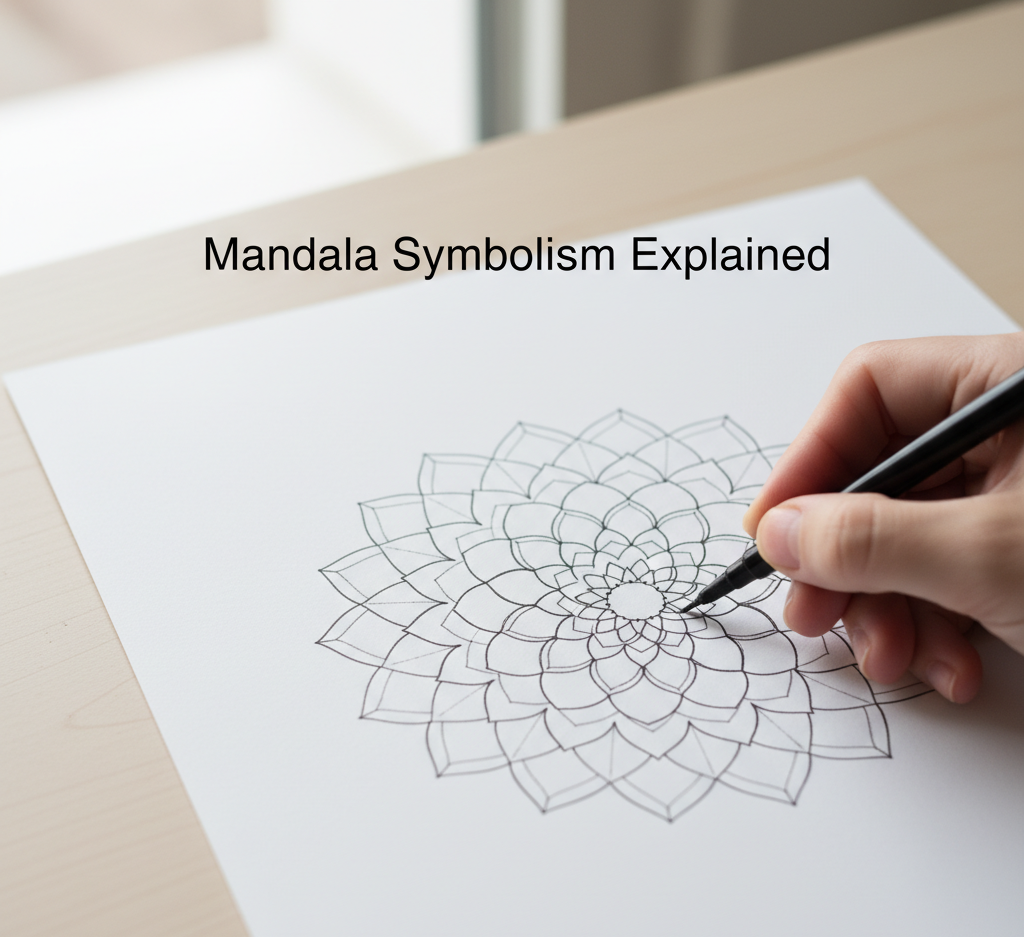
Mandalas are more than pretty shapes. They are circles that show balance, peace, and the idea that everything in life is connected. If you want a simple answer to what does mandala symbolizes, it often represents unity and harmony within yourself. People from many cultures use mandalas for meditation, healing, and spiritual growth. This guide explains mandala symbolism, meanings, colors, shapes, symbols, cultural roots, and how they are used today.
What a Mandala Is and Why People Use It
A mandala looks simple at first. It is a circle filled with patterns that move out from the center. But even though it looks like art, it holds deep meaning. For many people, a mandala is a picture that helps them focus, calm down, or understand their thoughts better. Therapists sometimes use mandalas during art therapy because drawing inside circles helps the mind relax.
People use mandalas in many ways. Some color them to feel peaceful. Others draw them when they feel stressed. In some cultures, monks spend hours creating sand mandalas to share a message of patience and kindness. The circular shape makes people feel centered and steady. This is why mandalas have been loved for thousands of years.
The Deeper Idea Behind Mandala Designs
A mandala is not only a drawing. It also shows how life works. Everything begins at the center, then grows outward. When you look at a mandala, your eyes naturally move toward the middle or follow the repeating shapes. This repeating pattern teaches an idea. Life is full of cycles. You grow, you learn, you rest, and then you grow again.
The design of a mandala shows order and meaning. Even when the lines and shapes look complex, there is still balance. This balance helps explain why so many spiritual groups use mandalas during prayer, meditation, or learning. The shapes remind people that life has a purpose and a rhythm.
What Does a Mandala Symbolize in Everyday Life
People often ask what does mandala symbolizes, and the answer is simple. It shows wholeness. It shows balance between your thoughts and feelings. It shows how everything in life connects.
A mandala may stand for:
- Inner calm
- Personal growth
- Balance
- Understanding yourself
- Spiritual awareness
Many people keep mandala art in their homes because it brings a feeling of peace. When you focus on the center of a mandala, your mind becomes quieter. This helps you feel steady and safe. Books_WD often explains that simple art can support mental health, and mandalas are one of the best examples.
A mandala also symbolizes unity. No matter how many shapes appear inside it, everything fits together. This teaches that each part of your life matters. Your habits, emotions, choices, and relationships all create the whole picture of who you are.
Meaning of Mandala Patterns and Their Sacred Structure
Different patterns inside a mandala hold meaning. The circle shows the world and the idea of never-ending movement. Straight lines show direction. Curved lines show softness and flow. When these shapes mix, they create a balanced image.
Some common parts include:
- A center point that stands for the soul
- Rings that show layers of growth
- Triangles that show strength or change
- Squares that stand for stability
- Flowers that show life and renewal
These features help explain “mandala meaning,” “meaning of mandalas,” “mandalas meaning,” and “mandala symbolism.” Even though different cultures use their own styles, the core idea stays the same. A mandala teaches how to stay centered and grow with purpose.
The structure is sacred because it follows natural order. Nature grows in patterns. Flowers bloom in circles. Trees form rings. Stars move across the sky in round paths. Mandalas reflect these natural shapes. This is why many describe them as symbols of life itself.
Mandala Symbolism in Different Cultures and Belief Systems
Different cultures created their own designs, and each one added meaning. When we talk about “symbolism of mandala” or “symbolism in mandalas,” we look at how groups used them through history.
Hinduism
Mandalas appear in temples and prayer rituals. They guide meditation and help the mind focus on the divine. The center of the mandala often represents the presence of God.
Tibetan Buddhism
Tibetan monks create detailed mandalas from colored sand. When finished, they sweep them away to show that life is always changing. This practice highlights patience, kindness, and the meaning of letting go.
Christianity
In many old churches, stained glass windows were made in circular patterns. These windows act as Christian mandalas. They symbolize heaven, creation, and the connection between God and people.
Native American Traditions
Some tribes used circular art in healing ceremonies. These patterns represented the circle of life, nature, animals, and community.
All these examples show why the “significance of a mandala” is powerful. It crosses cultures because the circle shape speaks to everyone.
Mandala Meanings in Buddhism and Christian Traditions
Mandalas in Buddhism hold great depth. A Buddhist mandala often points to the universe, inner wisdom, and the path to enlightenment. Monks study the layout of mandalas to learn how to understand their own thoughts. A “mandala meaning in Buddhism” focuses on clearing the mind.
Christian mandalas usually appear in art. These circular patterns tell stories through color and shape. They teach ideas like hope, forgiveness, and eternal life. So when people search for “mandala meaning Christianity,” they often find symbols inside windows, paintings, or church designs.
Both religions use circles, but give them their own lessons. Buddhism uses mandalas for meditation. Christianity uses them to share spiritual messages through art.
How Colors and Elements Change the Meaning of a Mandala
Color is a large part of mandala meanings. When people study “mandala colors,” they learn that each shade sends a message.
Some common colors and their meanings include:
- Blue for peace and trust
- Red for strength and courage
- Yellow for joy and clarity
- Green for healing and growth
- Purple for wisdom and spiritual awareness
- White for purity and truth
The elements inside mandalas also add meaning. Shapes, animals, flowers, stars, and other symbols teach lessons about life. When people choose colors for a mandala tattoo, they often select them based on the message they want to express.
Books_WD often teaches readers that color is more than decoration. It guides emotions and thoughts. This is why many artists choose their mandala colors with care.
Popular Symbols Used Inside Mandalas and What They Represent
Inside mandalas, you may see flowers, shapes, or animals. These symbols add meaning and help express ideas in a simple way.
Here are common symbols found in mandalas:
Lotus Flower
The lotus stands for purity, hope, and spiritual awakening. This explains the “lotus mandala meaning” and “mandala flower meaning.”
Triangles
Triangles pointing upward show fire and courage. Triangles pointing downward show water and calmness.
Sun Shapes
Sun symbols stand for life, energy, and growth.
Leaves and Vines
These represent nature, healing, and new beginnings.
Sacred Geometry
Patterns like the Flower of Life show unity, creation, and universal connection.
These symbols appear in “mandala symbols and meanings,” “mandala symbols,” and “symbols for mandalas.” Artists choose symbols that match their feelings or spiritual path.
Modern Mandala Uses in Art, Tattoos, and Personal Expression
Today, mandalas are everywhere. People draw them, color them, wear them, and even tattoo them on their skin. Many want to know “what does a mandala tattoo mean?” A mandala tattoo can stand for personal healing, new beginnings, inner strength, or a meaningful memory.
Artists use mandalas in paintings, clothing designs, journals, and home decor. For some, creating a mandala is a spiritual practice. For others, it is a relaxing hobby. Because each part of a mandala holds meaning, it becomes a personal statement. A floral mandala’s meaning may show softness and growth, while a geometric one may show order and strength.
No matter where you find them, mandalas remind people to stay balanced and true to themselves.
Conclusion
A mandala is more than a circle. It is a symbol of life, balance, peace, and connection. When people ask, “What does a mandala symbolize?” the answer is clear. It symbolizes unity and harmony, both inside yourself and in the world around you. Cultures across history trusted mandalas to guide the mind, teach lessons, and bring comfort. Today, they continue to help people understand their feelings and stay centered.
If you want to explore, draw, or study mandalas, you will find endless meanings inside their shapes, colors, and symbols.
Whenever you are ready to explore more about mandala art or spiritual symbolism, Books_WD is here to help you discover deeper knowledge at your own pace.

