


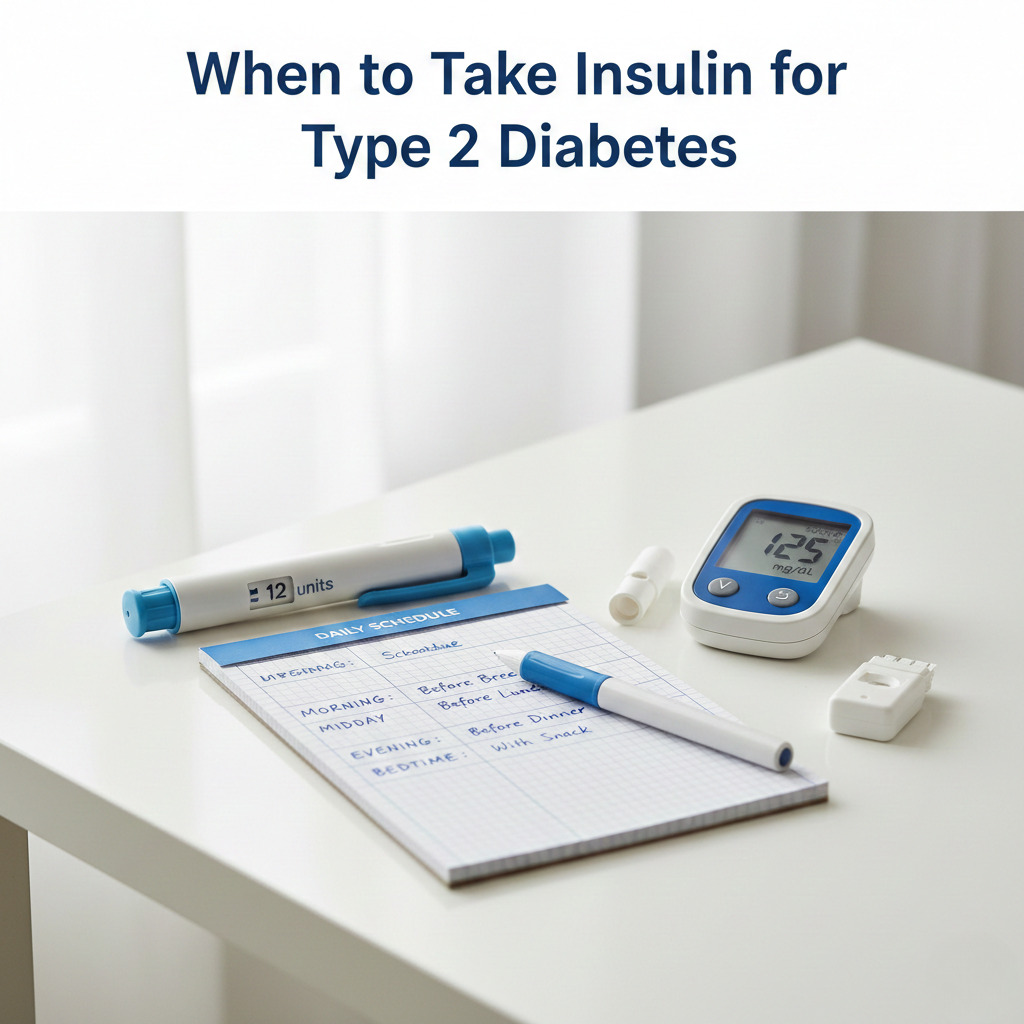
The exact answer to the question when to take insulin for type 2 diabetes is that insulin should be taken at the times your doctor recommends, which usually includes before meals for rapid acting insulin, once or twice daily for long acting insulin, and anytime blood sugar remains high even after other treatments fail to control it. Timing depends on the insulin type, your blood sugar patterns, and your daily routine.
This guide explains how insulin works, why some people with type 2 diabetes need it, how doctors decide when to start insulin therapy, and how to follow a clear insulin schedule that fits your life.
What does insulin do in the body and why does timing matter?
To understand when to take insulin for type 2 diabetes, it helps to know what insulin does inside your body. Insulin is a hormone your pancreas makes. Its job is to help move sugar from your blood into your cells. Your cells use sugar for energy. Without enough insulin, sugar stays in your blood instead of entering your cells.
In type 2 diabetes, the body still makes insulin, but it does not use it well. This is called insulin resistance. Over time, the pancreas becomes tired and cannot keep up. This is when insulin therapy becomes necessary.
Insulin timing matters because your blood sugar changes through the day. It rises after meals. It drops between meals. It changes with exercise, stress, sleep, hormones, and medication. The right timing keeps your sugar steady. The wrong timing can cause highs or lows.
When insulin matches your body’s natural needs, you feel more balanced. You have better energy. You avoid spikes and crashes. This is why doctors focus on both the dose and the schedule.
Why do some people with type 2 diabetes need insulin even when others do not?
Not everyone with type 2 diabetes needs insulin. Some people manage well with healthy eating, exercise, and oral medication. Others need insulin because their body cannot make enough on its own.
Here are the main reasons insulin becomes necessary:
1. The pancreas is producing less insulin
Your pancreas works hard for years before you ever see signs of diabetes. As time passes, insulin production drops.
2. Blood sugar stays high despite oral medication
If pills do not control your blood sugar, insulin provides a more reliable way to lower it.
3. A1C stays high
When A1C remains above your target, insulin may be the best tool to bring it down safely.
4. Your body is under stress
Illness, surgery, infections, or strong medications like steroids can cause big blood sugar spikes.
5. Pregnancy changes hormone levels
Hormones can raise blood sugar during pregnancy. Insulin is often the safest treatment in this situation.
6. You experience symptoms of high blood sugar
Symptoms include blurry vision, thirst, frequent urination, tiredness, and slow healing.
Insulin is not a sign of failure. It simply means your body needs extra help to stay healthy.
How does a doctor decide when to start insulin for type 2 diabetes?
Doctors do not choose insulin based on one reading. They look at your overall pattern.
Here is what they usually review:
1. Your A1C
An A1C above 9 percent often signals that insulin may be needed. Extremely high A1C levels, such as above 10 or 11 percent, make insulin more likely.
2. Your daily blood sugar levels
If your morning or fasting numbers stay high, your body may not have enough insulin overnight.
3. Your symptoms
Strong symptoms mean blood sugar has been high for a long time.
4. Your response to medication
If pills do not work or stop working, insulin becomes the next step.
5. Your pancreas function
Over time, the pancreas becomes weaker. Insulin replaces what the body can no longer make.
6. Special medical events
Infection, surgery, pregnancy, or steroid use can raise blood sugar quickly.
Doctors use all of these details to decide when to start insulin. They do not rely only on one number.
What tells you when to take insulin for type 2 diabetes each day?
You may wonder how you know when to take your insulin. The answer depends on your insulin type. Different insulins work at different speeds.
Here is a simple guide:
Rapid acting insulin
Taken before meals to manage sugar from food.
Short acting insulin
Usually taken 30 minutes before a meal.
Intermediate acting insulin
Taken once or twice a day to handle sugar between meals.
Long acting insulin
Taken at the same time every day to give steady control.
Mixed insulin
Taken before breakfast and dinner.
Your doctor will create your schedule based on your blood sugar pattern. Sticking to the same timing each day helps your body stay stable. This makes your sugar easier to manage.
What are the signs that you need to start insulin therapy?
You may need insulin therapy when your blood sugar stays high even after other treatments. Here are the main signals:
1. High A1C
An A1C above 9 percent means your body needs more help.
2. Morning high readings
If your fasting sugar is high, you may need long acting insulin.
3. After meal spikes
If your sugar jumps high after eating, you may need rapid acting insulin.
4. Symptoms of high blood sugar
These symptoms include thirst, urination, blurry vision, or tiredness.
5. Weight loss
Unplanned weight loss can be a sign that your body is not processing sugar well.
6. Failure of oral medication
If pills no longer work, insulin may be the next step.
7. Frequent infections
High sugar weakens the immune system.
If you see these signs, talk with your doctor. They can review your numbers and decide if it is time for insulin.
How do you know when to take night time insulin, and why is it important?
Night time insulin is usually long acting insulin. It gives steady support while you sleep. Many people with type 2 diabetes have high morning sugar. This happens when the liver releases sugar overnight.
Night time insulin solves this problem by controlling sugar between dinner and the next morning.
You know it is time for night time insulin when:
1. Your fasting sugar is high every morning
This shows your body needs support overnight.
2. You see a big difference between bedtime and morning sugar
A large rise suggests your liver is releasing too much sugar.
3. Your doctor recommends it
Doctors use your readings to plan the timing.
Night time insulin helps prevent morning spikes. It also helps you feel steady throughout the day.
How often should you take insulin and what does your schedule depend on?
Your insulin schedule depends on your insulin type. Some people take insulin once a day. Others take it two or three times a day.
Here are common dosing patterns:
Once daily
Long acting insulin taken at the same time each day.
Twice daily
Mixed insulin or intermediate insulin used morning and evening.
Three times daily
Rapid acting insulin taken before each meal.
Four times daily
Rapid acting insulin before meals and long acting insulin once daily.
Your doctor studies your blood sugar pattern to choose the best schedule. Your meals, activity, sleep, and medication history also help decide your routine.
What A1C result suggests it is time to take insulin?
A1C shows your average blood sugar for three months. It helps your doctor see the bigger picture.
Here is a simple guide:
A1C of 7 to 7.9
May need medication changes.
A1C of 8 to 8.9
Possible need for stronger medication or insulin.
A1C of 9 or higher
Insulin is usually recommended at this point.
A1C above 10 or 11
Insulin becomes very important to prevent complications.
A high A1C does not mean you did anything wrong. It shows your pancreas needs more help.
How can you safely follow an insulin schedule for type 2 diabetes?
A safe insulin schedule helps protect you from highs and lows. Here are simple habits that help:
1. Take insulin at the same time every day
Routine keeps your body steady.
2. Eat meals on a schedule
This prevents sudden drops in sugar.
3. Check blood sugar often
This helps you understand how your body reacts.
4. Rotate injection spots
This avoids skin problems.
5. Keep insulin stored correctly
Do not use expired or overheated insulin.
6. Communicate with your doctor
Everybody is different. Your doctor can adjust your plan as needed.
Following a schedule gives you better control and fewer surprises.
Final thoughts
Insulin is a powerful tool that helps people with type 2 diabetes stay healthy. Timing is the key to making insulin work well. Understanding how insulin fits into your daily routine helps you avoid highs and lows. This guide created by Books_WD helps you understand your insulin plan in a simple and clear way.
If you ever feel confused about your insulin schedule, talk with your healthcare provider. It is always better to ask early and stay safe.
If you want help learning how to understand your readings, there are many ways to track your numbers and feel more confident.

