

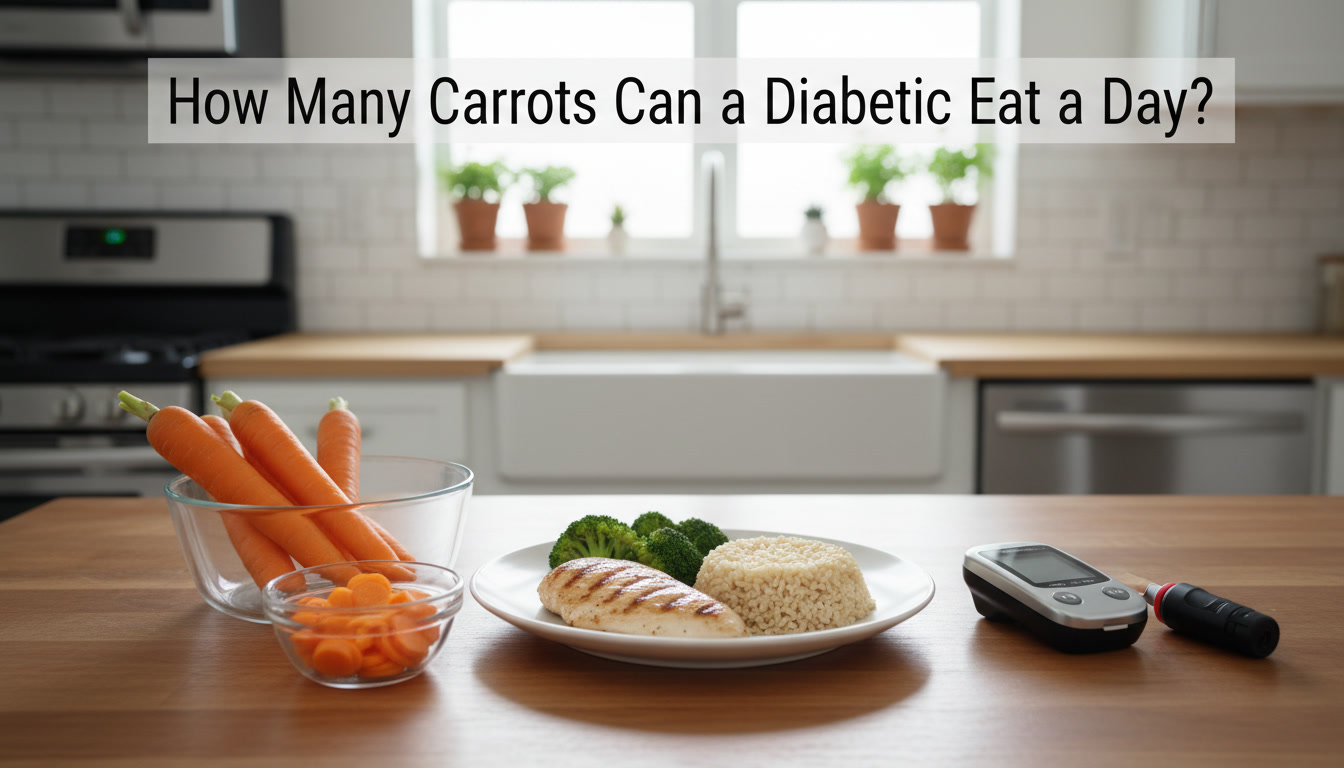
Most people with diabetes can enjoy carrots every day in sensible portions. For many adults, about 1 medium carrot, ½ cup cooked carrots, or 1 cup raw carrot sticks can fit well into a balanced meal plan. The best amount depends on total carbs, medications, activity level, and the rest of the meal. Carrots are rich in fiber, vitamin A, and nutrients, so they can be a healthy choice when portions stay reasonable.
Many readers ask, how many carrots can a diabetic eat a day, because they want healthy foods that will not raise blood sugar too much. That is a smart question. Carrots contain natural sugars and carbohydrates, but they also offer fiber and valuable nutrients. For most people, carrots do not need to be avoided. They simply need to be eaten with awareness and balance.
The short answer is yes, diabetics can eat carrots daily. Portion size and meal context matter more than fear of one vegetable.
Why Carrots Are a Common Question in Diabetes Meal Planning
Carrots are popular, easy to find, and simple to eat. People add them to salads, soups, roasted meals, lunch boxes, and snacks. Because they taste slightly sweet, many people worry they may be bad for diabetes.
That concern is understandable. People with diabetes often hear that sugar is the enemy. Then they notice carrots taste sweet and wonder if they should avoid them.
The truth is more nuanced. Natural sweetness in vegetables is not the same as candy, soda, or desserts. Whole carrots come with fiber, water, and nutrients that change how the body handles them.
Carrots also appear in many forms:
- Raw carrot sticks
- Cooked carrots
- Shredded carrots
- Roasted carrots
- Carrot soup
- Carrot juice
Each form can affect the body a little differently. That is why this question comes up so often in diabetes meal planning.
Nutrition Facts of Carrots, Carbs, Fiber, and Natural Sugar
To understand whether carrots fit your plan, it helps to know what they contain.
A typical serving of carrots offers:
- Carbohydrates
- Fiber
- Natural sugars
- Very little fat
- Low calories
- Water
- Beta carotene
- Vitamin A
- Potassium
Carbohydrates in Carrots
Carrots do contain carbs, but the amount is modest in normal portions. That means many people can enjoy them without large blood sugar spikes, especially when paired with other balanced foods.
Fiber Helps
Fiber slows digestion and can help support steadier glucose response. Whole carrots contain more helpful structure than juice.
Natural Sugar Is Not the Same as Added Sugar
The sweetness in carrots comes naturally. It arrives inside a whole food with nutrients and fiber. That is very different from sugar added to candy or sweet drinks.
Nutrient Dense Food
Carrots give strong nutrition for very few calories. That makes them a smart option for many people trying to eat well.
How Carrots Affect Blood Sugar Levels and Glucose Response
Carrots usually have a mild effect on blood sugar when eaten in normal amounts. Many people fear them more than they need to.
Glycemic Index vs Real Life
Some people search the glycemic index of carrots. While that can be useful, it is not the whole story. Portion size matters too. This is where glycemic load becomes important. A food may have a moderate glycemic index, but if you eat a small portion, the real impact can still be modest.
Whole Carrots Digest Differently
Chewing a raw carrot takes time. The body digests it slower than a sugary drink or refined snack.
Pairing Changes the Result
If you eat carrots with protein, healthy fat, or fiber rich foods, blood sugar often rises more slowly than if you eat a large carb heavy snack alone.
Example
Compare these two snacks:
- Large cookie
- Carrot sticks with hummus
The second choice often supports steadier energy and better glucose control.
Everyone Responds Differently
Your medications, movement, sleep, stress, and meal timing all matter. Monitoring your own blood sugar can give the best personal answer.
Raw vs Cooked Carrots for Diabetics, What Changes?
Many people ask whether raw carrots for diabetics are better than cooked carrots for diabetics. The answer depends on portion and preparation.
Raw Carrots
Raw carrots are crunchy, filling, and easy to portion. They often take longer to eat, which may help with satisfaction.
Benefits:
- Great for snacks
- Easy to pack
- Keeps texture
- No added oils needed
Cooked Carrots
Cooking softens carrots and may make them easier to digest. Some people prefer them in meals.
Benefits:
- Easy to chew
- Great in soups or roasted dishes
- Warm and satisfying
Does Cooking Change Blood Sugar Impact?
Cooking can change texture and digestion speed slightly, but portion size still matters most. A sensible serving of cooked carrots can fit into a diabetes friendly meal.
Best Choice
Choose the version you enjoy and can eat in balanced portions. The healthiest food is often the one you can repeat consistently.
Best Daily Portion Size of Carrots for Diabetes Management
This is the practical answer most readers want.
For many adults with diabetes, these portions can work well:
- 1 medium carrot
- ½ cup cooked carrots
- 1 cup raw carrot sticks
- Small handful of shredded carrots added to meals
These are general examples, not personal medical advice.
Why Portion Size Matters
Even healthy foods contain carbohydrates. Eating several large servings at once may affect blood sugar more than a sensible portion.
A Smart Daily Range
Many people do well with 1 to 2 servings spread through the day, depending on their full meal plan.
Better Than Guessing
Use measuring cups or read labels when using packaged foods. This helps you learn what a serving looks like.
If You Use Insulin or Medication
Some people need to match food intake with medicine timing. Your care team can guide you.
Quality Over Quantity
Instead of asking how much you can get away with, ask how carrots fit your whole eating pattern.
Smart Ways to Eat Carrots in a Balanced Meal or Snack
How you eat carrots matters as much as how many you eat.
Pair with Protein
Try carrots with:
- Hummus
- Greek yogurt dip
- Cottage cheese
- Tuna salad
- Boiled eggs
Protein may help you feel full longer.
Add to Meals
Use carrots in:
- Salads
- Stir fry meals
- Soups
- Grain bowls
- Roasted vegetable trays
Use Carrots to Replace Less Helpful Snacks
Instead of chips or candy, carrot sticks can be a better option.
Mix with Other Non Starchy Vegetables
Pair carrots with cucumber, celery, peppers, or broccoli for variety.
Watch Sauces
A healthy carrot snack can become less helpful when covered in sugary sauces.
Keep It Easy
Wash and cut carrots ahead of time. Easy foods get eaten more often.
When Carrot Juice, Large Portions, or Added Sugars Become a Problem
Carrots can be healthy, but some forms deserve caution.
Carrot Juice
Carrot juice removes much of the fiber found in whole carrots. It is easier to drink quickly and may affect blood sugar faster.
Whole carrots are often the better choice.
Very Large Portions
Eating a huge bowl of carrots at once adds more carbs than expected. Even healthy foods need balance.
Added Sugars
Some glazed carrot recipes include brown sugar, honey, syrups, or sweet sauces. These can raise blood sugar more than plain carrots.
Processed Products
Check labels on packaged carrot snacks or blended drinks.
Better Option
Choose whole carrots most of the time, and enjoy sweeter versions occasionally with awareness.
Who Should Personalize Carrot Intake and When to Ask a Doctor
Not everyone needs the same plan.
You May Need a Personalized Approach If You:
- Use insulin
- Take glucose lowering medications
- Have frequent high blood sugar
- Have frequent low blood sugar
- Are trying to lose weight
- Have kidney concerns
- Follow a specific meal plan
- Notice strong reactions after meals
When to Ask a Doctor or Dietitian
Reach out if:
- You feel confused about carbs
- Your blood sugar feels unpredictable
- You need snack ideas
- You want a meal plan that fits real life
- You feel stressed by food choices
Expert support can save time and reduce frustration.
No Need for Fear
Many people with diabetes can enjoy a wide range of foods. Guidance helps you do it confidently.
Final Verdict from Books_WD for Readers
Yes, most people with diabetes can eat carrots every day in sensible portions. Carrots are nutrient dense foods that offer fiber, beta carotene, vitamin A, and satisfying crunch. They can fit into healthy eating plans when paired with balanced meals and smart portions.
The best amount depends on your body, medications, activity, and total carb intake. For many people, 1 serving a day works well, and some may enjoy more within a personalized plan.
At Books_WD, we recommend focusing less on fear and more on habits. Choose whole foods, watch portions, and build meals you can enjoy long term.
Conclusion
Carrots are not a food most people with diabetes need to avoid. In fact, they can be a helpful part of a balanced routine. They offer nutrients, fiber, and natural sweetness in a whole food package.
The key is simple: keep portions sensible, choose whole carrots often, and pair them with protein or other healthy foods. Raw and cooked carrots can both work well.
Your overall eating pattern matters far more than one vegetable. Consistent habits usually beat strict rules.
If you want more easy health guides, smart food tips, and trusted answers made simple, follow Books_WD for practical content that helps real people make better choices every day.
