

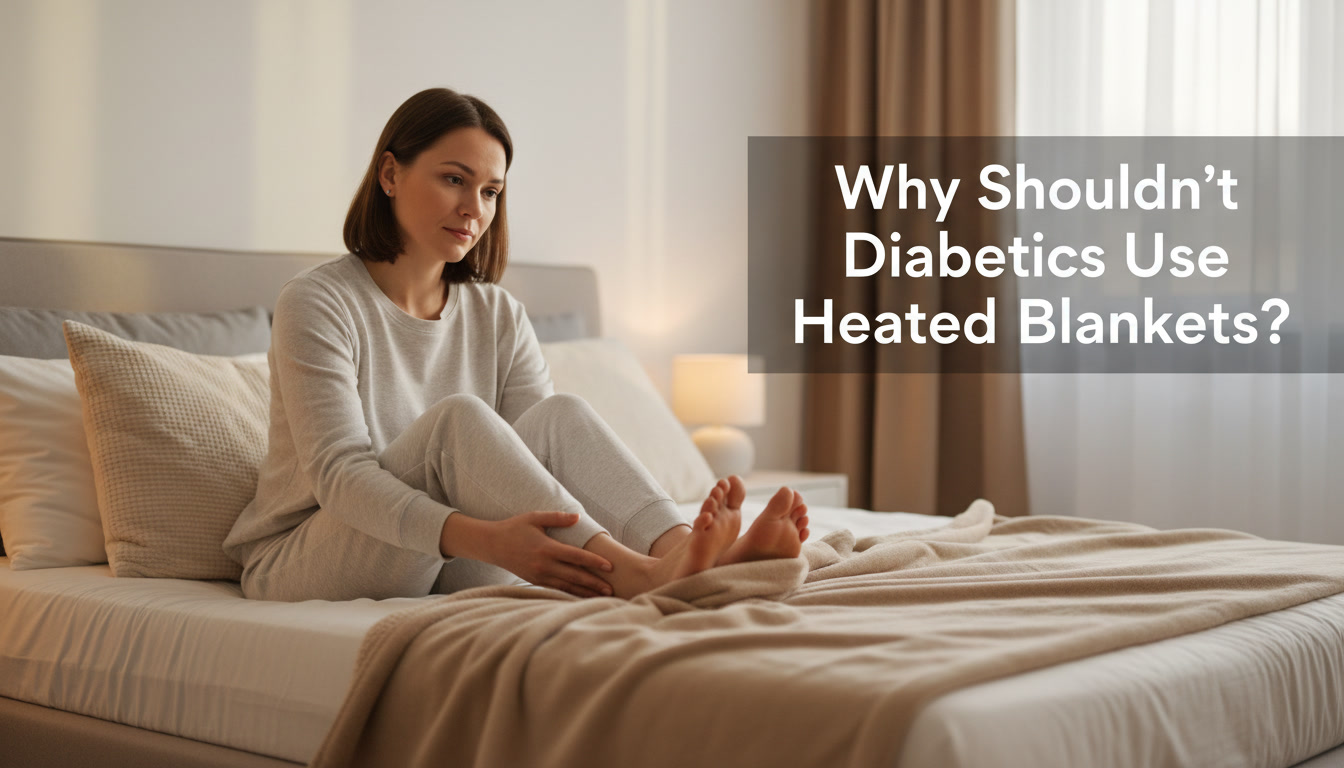
Why shouldn’t diabetics use heated blankets? The main reason is safety. Diabetes can cause nerve damage, reduced feeling, poor circulation, and slower healing. Because of this, a heated blanket may feel comfortable at first but can sometimes cause burns, skin irritation, blisters, or unnoticed injury. Many healthcare professionals recommend caution or safer warming options, especially for people with neuropathy or foot problems.
Many people with diabetes feel cold at night and want quick relief. That makes sense. Comfort matters, sleep matters, and staying warm matters. But the safest solution is not always the most obvious one. At Books_WD, we believe health advice should be practical, clear, and focused on protecting long term wellbeing.
Why Staying Warm Can Be More Complex with Diabetes
Feeling cold is common, especially at night or during colder months. For people with diabetes, staying warm can be more complicated than just adding heat.
Diabetes may affect:
- Nerve health
- Blood flow
- Skin sensitivity
- Healing speed
- Comfort during sleep
When these areas change, the body may react differently to heat and cold.
Some people with diabetes feel cold feet even when the room feels warm. Others may have numbness and not notice temperature well. This creates a challenge. A person wants warmth, but the usual tools may carry extra risk.
Sleep comfort matters because poor sleep can affect mood, energy, and daily habits. But comfort should never come at the cost of safety.
That is why people with diabetes often benefit from gentle warming methods instead of strong direct heat.
Simple examples:
- Warm socks
- Layered blankets
- Warmer room temperature
- Dry bedding
- Comfortable sleepwear
The goal is steady warmth, not intense heat.
Understanding Heated Blankets and Why People Use Them
Heated blankets, also called electric blankets, use built in wires or heating elements to create warmth. Many people use them in winter or in cold homes.
Why they are popular:
- Quick warmth
- Cozy feeling
- Helps cold feet
- Can reduce room heating costs
- Comfort before sleep
Some models offer:
- Adjustable heat levels
- Auto shut off
- Soft fabric
- Zoned heating
For many people, heated blankets can feel helpful. But for someone with diabetes, the question is not only comfort. It is whether the blanket is safe for their body condition.
The risk is often related to direct heat contact over time. If skin stays against a warm area too long, injury may happen slowly.
This is more concerning when a person cannot feel the warning signs clearly.
That is why a heated blanket that seems harmless for one person may not be the best choice for another.
Why Shouldn’t Diabetics Use Heated Blankets? Clear Safety Answer
The clearest answer is this: many diabetics are advised to avoid heated blankets or use extreme caution because diabetes can reduce the body’s ability to sense heat and heal skin damage.
That means problems may begin before a person notices them.
Main risks include:
- Burns
- Blisters
- Skin irritation
- Pressure spots
- Dry skin
- Delayed healing
- Hidden injury during sleep
The danger is not that every diabetic will be harmed by a heated blanket. The danger is that some people may not know they are at risk.
This is especially true for people with:
- Neuropathy
- Poor circulation
- Foot ulcers
- History of burns
- Numbness
- Thin or fragile skin
If you have diabetes and want to use one, the safest first step is to ask your doctor. Personal risk matters more than general advice.
For many people, safer alternatives can provide warmth without direct heating contact.
How Neuropathy Increases Burn Risk from Heated Blankets
Neuropathy means nerve damage. It is common in diabetes and often affects the feet and legs first.
Possible signs of neuropathy:
- Numbness
- Tingling
- Burning feeling
- Sharp pains
- Less feeling to touch
- Trouble sensing temperature
This matters because heat usually protects itself through discomfort. When something gets too hot, pain tells you to move away.
But if feeling is reduced, that warning may come late or not at all.
Example:
A person sleeps with feet pressed against one warm area of a blanket for hours. If they cannot feel excess heat well, skin may become irritated or burned before they wake up.
This is why neuropathy and burns are strongly linked in safety advice.
Even low heat over a long time can be a problem.
What helps more:
- Indirect room warmth
- Thick socks
- Extra bedding layers
- Mattress warmth from room temperature
- Safe doctor approved options
When sensation changes, direct heat tools deserve caution.
Poor Circulation, Skin Damage, and Slow Healing Concerns
Circulation means blood flow. Blood carries oxygen and nutrients that help tissues stay healthy and repair damage.
Some people with diabetes develop circulation problems, especially in the legs and feet.
Possible signs:
- Cold feet
- Pale skin
- Slower healing
- Less hair growth on legs
- Pain when walking
- Skin changes
When circulation is reduced, even a small burn or blister may become more serious.
Why?
Because healing can take longer. Skin that stays damaged longer has more time for infection or worsening irritation.
Direct heat may also dry the skin. Dry skin can crack. Cracks create openings for germs.
This is why small injuries should never be ignored.
Protective habits include:
- Daily skin checks
- Moisturizing dry areas
- Wearing proper socks
- Avoiding strong heat sources
- Seeking early treatment for skin changes
Prevention is easier than recovery.
Why Diabetics Often Get Cold Feet at Night
Many people ask this because cold feet are real and frustrating.
Common reasons include:
Circulation Changes
Reduced blood flow can make feet feel colder.
Nerve Changes
Neuropathy may change how the brain receives signals. Feet may feel cold even when skin temperature is normal.
Room Temperature
Bedrooms often get cooler at night.
Less Movement During Sleep
Movement helps circulation. Lying still for hours may increase cold feelings.
Thin Bedding or Bare Feet
Simple comfort issues matter too.
Cold feet do not always mean danger, but they should not be ignored if new, painful, or severe.
Better responses to cold feet:
- Warm socks before bed
- Move around before sleep
- Light stretching
- Comfortable room temperature
- Extra blanket layers
These methods warm the whole body instead of applying direct heat to one spot.
Safer Alternatives to Heated Blankets for Warmth and Comfort
You can stay warm without relying on direct electric heat.
Layered Blankets
Several light layers often work better than one thin blanket. Layers trap warm air.
Warm Socks
Soft socks can help cold feet safely. Choose socks that are not too tight.
Room Heating
Warming the room creates even more comfort rather than concentrated heat.
Flannel or Thermal Bedding
Some fabrics hold warmth well.
Warm Pajamas
Comfortable sleepwear helps reduce heat loss.
Pre Warm the Bed Indirectly
Warm the room before bedtime rather than heating the body directly with a hot surface.
Gentle Movement Before Bed
A short walk or light stretches can help circulation.
Ask Your Doctor
If cold feet are frequent, a medical reason may need attention.
The best solution depends on why you feel cold in the first place.
Winter Safety Tips for Diabetics at Home and During Sleep
Winter can be harder on comfort and skin health. A few habits can help.
Check Feet Daily
Look for:
- Redness
- Blisters
- Cracks
- Cuts
- Color changes
Use a mirror if needed.
Keep Skin Moisturized
Dry winter air can worsen cracking.
Avoid Bare Floors
Cold floors can be uncomfortable and risky.
Wear Proper Footwear Indoors
Supportive slippers or shoes can protect feet.
Keep Bedding Dry and Clean
Damp bedding feels colder and irritates skin.
Stay Active
Movement supports circulation.
Keep Blood Sugar Managed
Good glucose control supports nerves and circulation over time.
Be Careful with All Heat Sources
This includes space heaters, hot water bottles, heating pads, and heated blankets.
Safe habits often matter more than gadgets.
When to Ask a Doctor About Cold Feet, Pain, or Numbness
Sometimes cold feet are just cold feet. Other times they are a sign to get help.
Contact a healthcare provider if you notice:
- New numbness
- Burning pain
- Tingling that worsens
- Foot wounds
- Blisters
- Skin color change
- One foot colder than the other
- Swelling
- Pain when walking
- Cracks not healing
- Trouble sleeping from symptoms
A doctor may check:
- Circulation
- Nerve function
- Skin health
- Blood sugar control
- Footwear fit
Early care can prevent bigger issues later.
A podiatrist may also help with foot specific concerns such as calluses, nail issues, pressure points, or skin changes.
Simple Night Routine for Safe Comfort and Better Sleep with Diabetes
Use this easy routine to stay warm and protect your feet.
One Hour Before Bed
- Set room to a comfortable temperature
- Put on warm socks
- Reduce drafts if needed
Thirty Minutes Before Bed
- Do light stretching
- Walk around the room or house
- Prepare layered bedding
Before Getting Into Bed
- Check feet for cuts or redness
- Apply moisturizer to dry skin areas
- Make sure socks are dry and comfortable
During Sleep
- Use layered blankets
- Keep feet covered
- Avoid direct heating devices unless medically approved
In the Morning
- Check skin again
- Note any discomfort or redness
This routine is simple, low risk, and easy to repeat.
The best sleep habits are usually the ones you can do every night.
Conclusion
So, why shouldn’t diabetics use heated blankets? The biggest reason is safety. Diabetes can affect sensation, circulation, skin health, and healing. Because of that, direct heat from a blanket may cause burns, irritation, or unnoticed injury for some people.
That does not mean you must stay cold. Safer options like layered blankets, warm socks, room heating, and healthy bedtime habits can provide comfort without the same level of risk.
At Books_WD, we believe smart health choices should feel simple and practical. Protecting your feet and skin today can prevent bigger problems tomorrow.
If you often feel cold, numb, or uncomfortable at night, speak with your doctor. The right plan can improve both comfort and long term health.
