

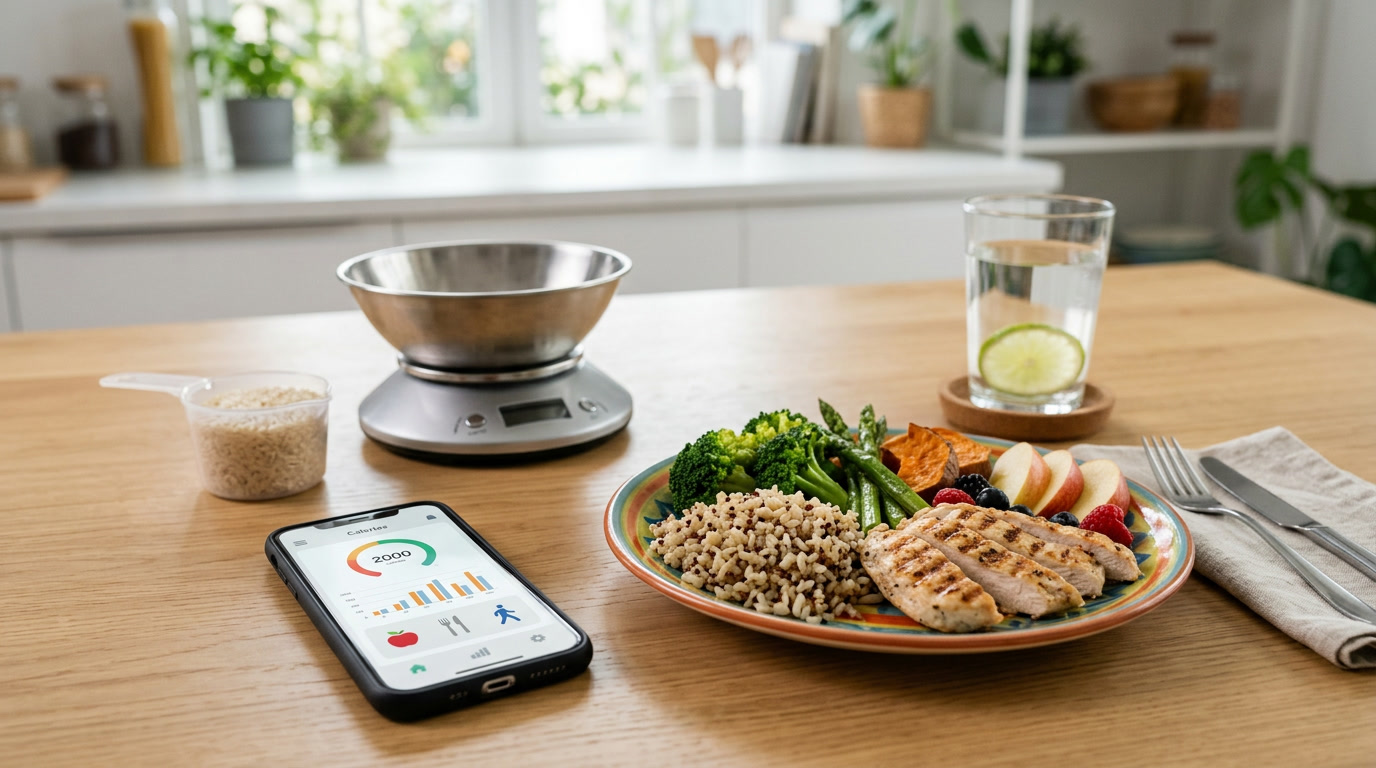
The main benefits of using a calorie tracking application include better awareness of food intake, easier portion control, clearer nutrition goals, and the ability to notice eating patterns. Most apps let you record meals, drinks, snacks, activity, weight, and nutrients in one place.
Food tracking does not guarantee weight loss, and app estimates are not always exact. However, research shows that frequent and consistent dietary self monitoring is linked with better short term weight loss results. The greatest benefit comes from using the information to make realistic changes instead of trying to record every meal perfectly.
1. A Calorie App Shows What You Actually Eat
Many people remember their main meals but overlook drinks, sauces, cooking oil, snacks, and small bites taken throughout the day. These items may add more calories than expected.
A tracking app creates a written record. It allows you to review what you ate instead of depending on memory.
This record may reveal patterns such as:
- Drinking more calories than expected
- Eating very little during the day and overeating at night
- Choosing large portions when eating away from home
- Snacking while working or watching television
- Using more oil, dressing, or sauce than you realized
- Eating more on stressful or poorly rested days
The CDC recommends recording food and beverages for several days to understand current intake and identify small changes. It also suggests reviewing physical activity, sleep, and stress because these factors can influence weight and eating behavior.
The purpose is not to judge yourself. It is to replace guessing with useful information.
2. It Makes Portion Sizes Easier to Understand
A portion is the amount you choose to eat. A serving is the amount listed on a food label or used by an app.
These amounts are not always the same.
For example, a package may appear to contain one portion even though the label lists two or three servings. If you enter only one serving in the app, the recorded calorie total may be much lower than the amount you actually ate.
Tracking teaches you to notice:
- The serving size on the label
- The number of servings in the package
- The amount placed on your plate
- The difference between cooked and uncooked measurements
- The calories added by toppings and sauces
You do not need to measure food forever. Measuring common foods for a short period can help you recognize normal portions later.
NIDDK recommends reading Nutrition Facts labels and understanding the difference between portions and servings. This can help people choose amounts that support their health and weight goals.
3. It Helps Create a Realistic Calorie Target
Calorie needs differ from person to person. Age, body size, activity, health, and weight goals all affect how much energy someone may need.
Many tracking apps estimate a daily target after asking for information such as height, weight, age, activity, and desired rate of change.
This can provide a useful starting point. It may help you see whether your usual intake is close to, above, or below your estimated needs.
However, the number is still an estimate. An app cannot fully understand your metabolism, medical history, muscle mass, medicines, pregnancy status, or daily movement.
The NIDDK Body Weight Planner also uses information about calorie intake and physical activity to create personalized weight plans. It shows that body weight changes are affected by both energy intake and changes in how the body responds over time.
Avoid choosing the lowest target offered by an app simply because you want faster results. A target that causes constant hunger, weakness, poor concentration, or repeated overeating is unlikely to be sustainable.
4. It Can Support Weight Loss and Maintenance
Dietary self monitoring is a common part of behavioral weight management programs. It gives users a way to compare daily actions with personal goals.
A systematic review found that frequent and consistent app based dietary tracking was associated with short term weight loss. Another review found that smartphone apps produced modest improvements in weight and body mass index over about four to six months, although results often became weaker after six months.
This means the app can support progress, but it does not replace long term habits.
Tracking may help by encouraging you to:
- Pause before making a food choice
- Plan meals before becoming very hungry
- Notice when portions begin increasing
- Return to your routine after travel or holidays
- Review what helped during successful weeks
- Spot changes before they become larger setbacks
The CDC also recommends monitoring food, activity, and weight when maintaining weight loss. Tracking can help people notice trends and respond earlier.
5. It Tracks More Than Calories
Calories measure energy, but they do not show the full quality of a meal.
Two meals can contain the same number of calories while providing very different amounts of protein, fiber, vitamins, minerals, sodium, and added sugar.
Many applications track:
- Protein
- Carbohydrates
- Fat
- Fiber
- Added sugar
- Sodium
- Calcium
- Iron
- Potassium
- Selected vitamins
This information may help explain why one meal keeps you satisfied longer than another.
For example, a meal with protein, vegetables, beans, and whole grains may feel more filling than a sugary drink and snack with the same calorie total.
Current healthy eating guidance encourages a varied pattern built around vegetables, fruit, whole grains, legumes, nuts, seeds, and suitable protein sources. Calorie tracking should support that wider pattern rather than turning food into one number.
6. It Can Improve Meal Planning
Tracking becomes more useful when it helps you plan ahead instead of only recording what already happened.
Many applications allow users to enter meals earlier in the day. This shows how a planned breakfast, lunch, dinner, and snack may fit together.
Planning can help you avoid reaching dinner with very few calories left or realizing late in the day that you ate little protein or fiber.
A simple planning method includes:
- Enter your evening meal first if it is already planned.
- Add breakfast and lunch.
- Review the remaining calories and nutrients.
- Add a suitable snack if needed.
- Adjust portions before eating.
This approach may reduce last minute food decisions. It can also make grocery shopping easier because you already know which meals you plan to prepare.
Planning should still allow flexibility. You can change the entry when your schedule, hunger, or meal changes.
7. It Helps Identify Personal Eating Patterns
A calorie log provides more than totals. It can show when, where, and why eating happens.
You may notice that you eat more when:
- You sleep fewer hours
- You skip breakfast or lunch
- Work becomes stressful
- Food is visible on your desk
- You order meals while extremely hungry
- You drink alcohol
- You spend the evening watching television
- You exercise without planning a later meal
These patterns can guide practical changes.
Someone who snacks every afternoon may not need more discipline. Lunch may simply be too small. A person who overeats at night may benefit from eating regular meals earlier in the day.
NIDDK describes self monitoring, goal setting, problem solving, social support, and relapse planning as key parts of behavioral weight management. A tracking app can support these skills when users review the information and take action.
8. Using a Tracking App in Boston, Massachusetts
Begin by recording your normal intake for three to seven days. Do not make major changes during this first stage.
Include meals, drinks, snacks, sauces, and cooking fats. The goal is to understand your current routine.
At the end of the week, look for one change that feels useful and manageable.
You might decide to:
- Replace one sweet drink with water
- Add protein to breakfast
- Reduce one oversized restaurant portion
- Plan an afternoon snack
- Add vegetables to dinner
- Measure cooking oil for one week
Continue tracking while testing the change. Review whether it affects hunger, energy, and your weekly average.
Avoid changing everything at once. Smaller goals are easier to repeat and make it clearer which habit produced the result.
9. It Provides Feedback and Accountability
Tracking creates a simple form of accountability. Each entry reminds you that your daily choices are connected to a larger goal.
Some applications add:
- Daily reminders
- Progress charts
- Weekly reports
- Meal streaks
- Activity tracking
- Weight trends
- Community groups
- Coach feedback
- Recipe suggestions
- Goal notifications
These features can be helpful, but they should not create guilt. Missing a day does not erase your progress.
Return to tracking at the next meal rather than waiting for a new week or month.
Digital tools may make tracking easier than paper records because they can save frequent meals, scan barcodes, and calculate totals automatically. However, research suggests that consistency matters more than whether food is recorded on paper or electronically.
10. It Can Help With Health Goals Beyond Weight
People may also use calorie applications to support other nutrition goals.
Examples include:
- Increasing protein during strength training
- Eating more fiber
- Reducing sodium
- Monitoring carbohydrates
- Improving meal timing
- Increasing fruit and vegetable intake
- Checking calcium or iron intake
- Planning meals for better energy
These tools may help you prepare more useful questions for a doctor or registered dietitian.
For example, you can show several days of food records instead of trying to remember your usual intake during an appointment.
An app should not be used to diagnose a nutrient deficiency or change medical treatment. Food databases can contain missing or incorrect information, and the amount your body absorbs may differ from the amount entered.
11. Limits and Possible Drawbacks
Calorie tracking has benefits, but it is not ideal for every person.
App totals may be inaccurate because:
- Restaurant portions vary
- Homemade recipes are difficult to measure
- Users select the wrong database entry
- Serving sizes are entered incorrectly
- Exercise calorie estimates are too high
- Food labels allow small differences from the true amount
- Cooking methods change the final weight
Tracking can also become tiring. Research shows that engagement often falls over time, which can reduce the long term value of an app. Newer reviews recommend making apps more personalized and reducing the effort needed to record food.
Stop or change your approach if tracking causes:
- Fear of eating
- Strong guilt after meals
- Repeated meal skipping
- Obsession with exact numbers
- Anxiety when food cannot be measured
- Avoidance of social events
- Restriction followed by overeating
People with a current or past eating disorder should discuss calorie tracking with a qualified professional before using it.
A simpler option may be to track meal timing, vegetables, protein, water, or hunger instead of calories.
12. Frequently Asked Questions
Are calorie tracking applications accurate?
They provide estimates. Accuracy depends on the food database, serving size, recipe, restaurant portion, and information entered by the user. Use the numbers as guidance rather than treating them as exact.
Do I need to track calories every day?
No. Daily tracking may help during the learning stage, but some people later track only a few days each week or return to tracking when progress changes.
Can a calorie application help me lose weight?
It can support weight loss by improving awareness, planning, and accountability. Research suggests that consistent dietary self monitoring is linked with better short term results, but the app cannot guarantee success.
Should I eat back calories recorded from exercise?
Exercise calorie estimates can be inaccurate. Eating back every estimated calorie may reduce the intended calorie gap. A registered dietitian can help set a target when you exercise often or train intensely.
Is calorie tracking suitable for everyone?
No. It may not be suitable for people who become anxious or obsessive about food numbers or those with a history of disordered eating. Other methods can track habits without counting calories.
Conclusion
A calorie tracking application can improve awareness, portion knowledge, meal planning, nutrient tracking, and accountability. It can show patterns that are difficult to notice from memory alone.
The app works best as a learning tool. Record honestly, review weekly trends, and use the information to make one practical change at a time. Do not expect every number to be exact, and do not let calorie goals replace hunger, health, or food quality.
Explore more practical nutrition guidance from Books_WD, then try tracking your normal meals for three days to learn which small change may help most.
